
Damiana (Turnera diffusa) is a small aromatic shrub from Mexico and the American Southwest, and its dried leaf has been brewed as a folk tea for generations. If you have seen "damiana tea" on a menu or a shelf and wondered what it actually is, here is a plain guide to the plant, the traditional preparation, and the flavor.
What is damiana?
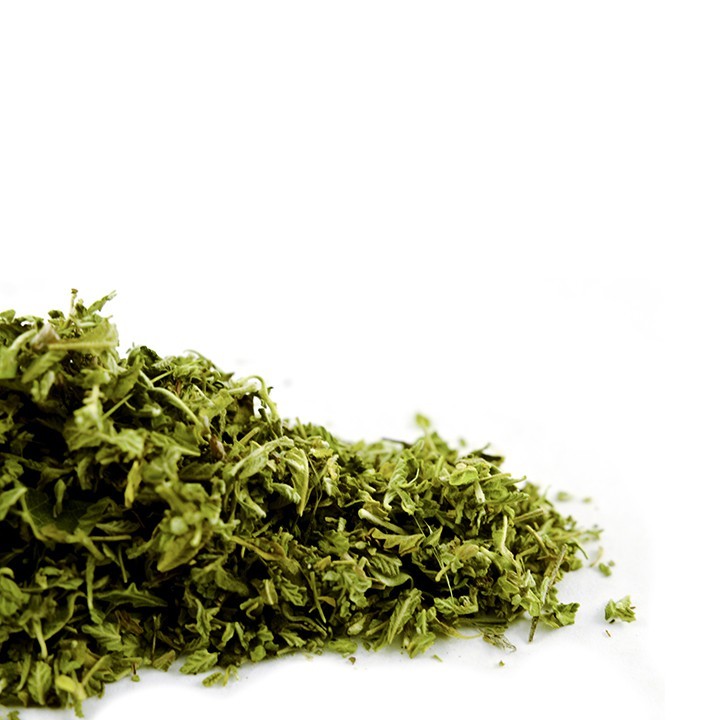
Damiana is a low, woody, aromatic shrub with small yellow flowers and pale green leaves that are strongly fragrant when crushed.1, 2 Botanically it is Turnera diffusa, traditionally placed in the family Turneraceae — now often folded into Passifloraceae under modern (APG) classification.1 It grows across southern Texas, Mexico, Central America, the Caribbean, and parts of South America, favoring dry, sunny, rocky ground.1, 2 The part people use is the dried leaf.
A long history as a folk tea and liqueur
Damiana has a deep place in Mexican tradition, where the leaves have been used "to flavor liqueurs, tea, and other beverages and foods" and appeared in several 19th-century patent medicines.2, 3 It is still the botanical behind the classic Baja California damiana liqueur — the Guaycura brand, bottled in its distinctive goddess-shaped bottle, made by infusing dried damiana leaves in alcohol. In cocktails it is sometimes used in place of triple sec in a margarita.3, 4
How to make damiana tea
Damiana is brewed much like any other loose-leaf herbal tea. One traditional method is to pour about a cup of boiling water over roughly a gram of dried leaf and steep for about 15 minutes.2 A practical everyday approach:
- Measure the leaf. A rounded teaspoon or two of dried damiana leaf per cup is a typical starting point. The leaf is light, so it fluffs up.
- Add hot water. Pour just-boiled water over the leaf in a mug, teapot, or infuser.
- Steep 5–15 minutes. Longer steeping pulls out more of the aromatic, slightly bitter character. Cover it while it steeps to hold in the volatile oils.
- Strain and sweeten to taste. Many people add honey, or blend damiana with mint, chamomile, or hibiscus to round out the flavor.
What does damiana tea taste like?
Damiana is aromatic and a little resinous. Credible descriptions call the brewed leaf "slightly bitter" with "an astringent quality," and note the leaves have "a strong spice-like odor somewhat like chamomile."1, 2 It is more assertive than a mild chamomile and mellower than a strong green tea — which is why it blends so well with honey, citrus, or mint.
Choosing your damiana
We carry whole-leaf damiana leaf sold by weight — the same material used for brewing, blending, or infusing. Whole leaf keeps its aroma longer than pre-ground herb, and you can crush it yourself right before brewing for the freshest cup.
Is damiana legal?
Yes. Damiana is not a federally controlled substance, and it is widely available as a culinary and botanical herb. In fact, the FDA lists "damiana leaves (Turnera diffusa Willd)" as a permitted natural flavoring substance for food under 21 CFR 172.510.5 (As with any botanical, the FDA does not evaluate or approve herbs for health uses.)
How to store it
Keep the dried leaf sealed, cool, dry, and away from light to preserve the aromatic oils. Stored well, it holds its fragrance for many months.
Want to try it? Pick up damiana leaf from our shop, or browse the full ethnobotanicals collection — shipped within 24 hours from Portland, Oregon.
Sources
- "Turnera diffusa." Wikipedia (description, range, family, aroma). en.wikipedia.org/wiki/Turnera_diffusa
- "Damiana." Encyclopedia.com (Gale) — description, Mexican history, traditional infusion, taste. encyclopedia.com
- "Turnera diffusa." Wikipedia (liqueur + margarita / triple-sec use; 19th-century patent medicines). en.wikipedia.org/wiki/Turnera_diffusa
- "At the Bar: Damiana Liqueur — Exploring Baja's Herbal Liqueur." el restaurante. elrestaurante.com
- FDA / 21 CFR § 172.510 — Natural flavoring substances (lists damiana leaves, Turnera diffusa). law.cornell.edu/cfr/text/21/172.510