

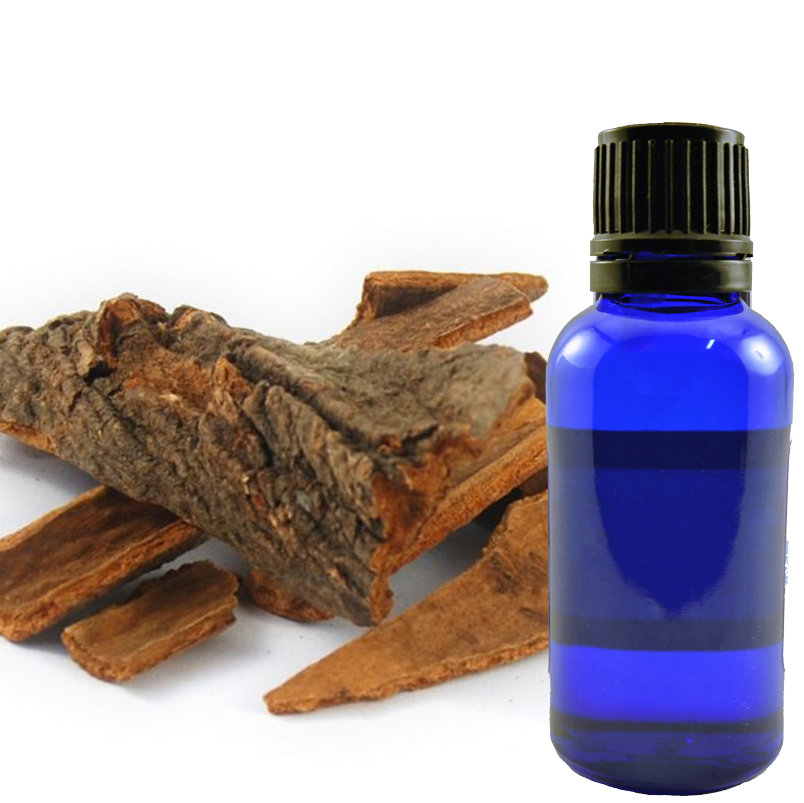
about this product
Cassia Bark Essential Oil (Cinnamomum cassia)
Steam-distilled essential oil of Cinnamomum cassia bark, the cassia or "Chinese cinnamon" essential oil. Cassia is the spice that most American "cinnamon" actually is, distinct from the more delicate Ceylon Cinnamon (Cinnamomum verum). Cassia bark oil is dominated by cinnamaldehyde (typically 80%+) - the compound responsible for the warm cinnamon aroma and the oil's strong skin-irritant character.
Key Facts
- Botanical name
- Cinnamomum cassia
- Plant part
- Bark
- Extraction
- Steam distillation
- Primary aromatic compound
- Cinnamaldehyde (typically 80%+ of the oil)
- Aromatic character
- Warm, spicy, sweet, pungent - classic "cinnamon" aroma
- Common uses
- Diffusion (heavily diluted), flavoring (drop-level dosing), perfumery
What is Cassia Essential Oil?
Cassia essential oil is the concentrated aromatic extract of cassia bark. The oil is exceptionally rich in cinnamaldehyde - typically 80% or more of the total oil - making it among the most potent and skin-irritating essential oils on the market. A single drop of cassia oil delivers the aromatic punch of a substantial quantity of cinnamon spice.
Important Safety Information
Cassia bark oil is a strong skin irritant due to the high cinnamaldehyde content. Never apply undiluted to skin. For topical use, dilute to no more than 0.5% in a carrier oil (about 3 drops per fluid ounce of carrier). Even diluted, cassia can cause sensitivity reactions. Avoid use around children, pregnant women, and individuals with sensitive skin. Do not use in baths (the oil concentrates at the surface and can severely irritate skin).
How to Use Cassia Essential Oil
Diffusion: just 1-2 drops in a diffuser (the oil is potent; small amounts go a long way). Holiday potpourri: a drop on cinnamon sticks or pine cones for warm holiday aroma. Perfumery: a tiny amount as a warm note in blends. Avoid direct skin application except at very low dilution.
Frequently Asked Questions
What's the difference between Cassia and Ceylon cinnamon oil?
Different species and significantly different chemistry. Cassia oil is dominated by cinnamaldehyde and is more pungent and skin-irritating; Ceylon cinnamon oil has lower cinnamaldehyde and is generally gentler.
Why is Cassia oil considered hazardous to skin?
High cinnamaldehyde content (80%+) makes it a strong skin irritant. Even small amounts can cause burning and sensitization.
Can I add Cassia oil to baths?
No; cassia oil concentrates at the bath surface and can severely irritate skin.
What does Cassia oil smell like?
The classic strong "cinnamon" aroma - warm, spicy, sweet, pungent.
Can I use it for flavoring?
By expert use only; the strength requires a single drop or less.
Why is most US "cinnamon" actually cassia?
Cassia is cheaper to produce and has a stronger aromatic character; most US grocery store cinnamon spice is cassia.
This product has not been approved by the Food and Drug Administration and is not intended to diagnose, treat, cure, or prevent any disease. We recommend that you consult with a qualified healthcare practitioner before using any herbal products, particularly if you are pregnant, nursing, or on any medications.
accessories
Cassia Bark Essential Oil
what buyers say
Reviews
No reviews yet.
Be the first to share your experience with this one.
Write your review
also in accessories
More from this section.

Cassia Bark Essential Oil
$18