

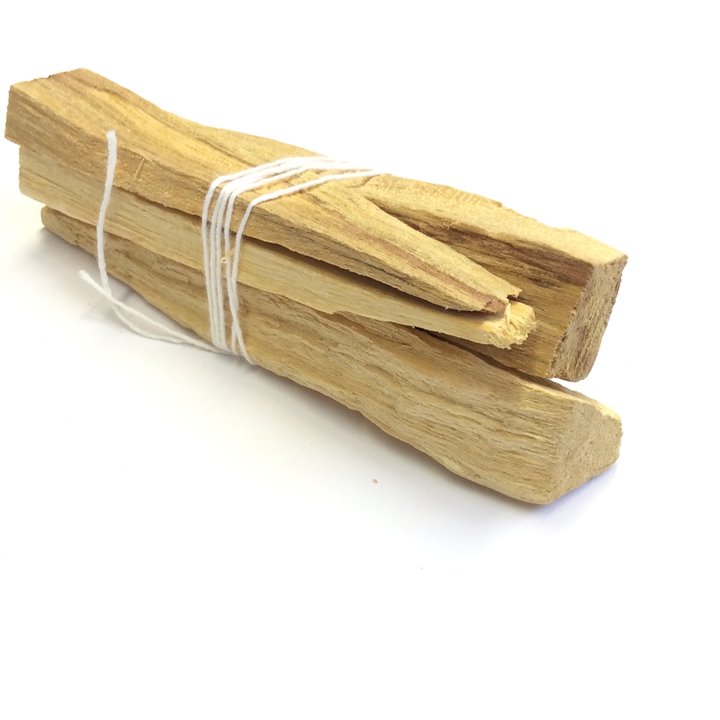
about this product
Palo Santo (Bursera graveolens) - "Holy Wood"
Sustainably harvested fallen-wood Palo Santo sticks from Bursera graveolens, the South American "Holy Wood" tree native to the dry forests of Ecuador, Peru, and other South American regions. The Spanish name "Palo Santo" means "Holy Wood," reflecting the ceremonial use across multiple Indigenous South American spiritual traditions.
Key Facts
- Botanical name
- Bursera graveolens
- Family
- Burseraceae (same family as Frankincense and Myrrh)
- Native region
- Tropical dry forests of South America (Ecuador, Peru) and parts of Central America
- Aromatic compounds
- Limonene, terpineol, alpha-pinene
- Sustainability
- Sustainably harvested fallen wood only - never from felled living trees
- Traditional use
- Ceremonial smudging and space clearing across multiple South American Indigenous traditions
What is Palo Santo?
Palo Santo is the wood of Bursera graveolens, a small tree of the tropical dry forests of South and Central America. The tree is in the same family as Frankincense and Myrrh and shares the family's tradition of producing aromatic resinous wood. Traditional Indigenous South American use of Palo Santo focuses on ceremonial smudging - burning small pieces of the wood to clear spaces, mark transitions, or support meditative practice.
Sustainability and Ethics
True Palo Santo aromatic character only develops in wood that has been allowed to fall naturally and age on the forest floor for 4+ years; freshly cut "Palo Santo" doesn't have the same aroma. The traditional sustainable harvest practice is to collect fallen wood only - never to cut live trees. Recent commercial demand has created sustainability pressure on Palo Santo, and Bursera graveolens is now monitored on the IUCN Red List. We source from suppliers who follow the traditional fallen-wood-only harvest standard.
How to Use Palo Santo
Light the end of a stick with a flame until it begins to smoke; gently blow out the flame; the stick will smolder and release fragrant smoke. Use the smoke to clear a space, set an intention, or as a meditative aromatic. Place in a fireproof bowl with sand to extinguish. The stick can typically be relit multiple times before being exhausted.
Frequently Asked Questions
What does Palo Santo smell like?
Sweet, woody, citrus, slightly mint, with a unique complex character. The aroma is distinct from any other smudge or incense.
Why "Holy Wood"?
The traditional name reflects the ceremonial use across multiple South American Indigenous spiritual traditions.
Is Palo Santo sustainable?
Only when sourced from naturally fallen wood, not from felled living trees. We source from suppliers following the traditional sustainable practice.
How is it related to Frankincense?
Same plant family (Burseraceae) and similar use as aromatic ceremonial material.
How do I light it?
Light the end with a flame, then gently blow it out so it smolders and smokes.
Can I relight a Palo Santo stick?
Yes; the stick can typically be relit multiple times before being fully spent.
This product has not been approved by the Food and Drug Administration and is not intended to diagnose, treat, cure, or prevent any disease. We recommend that you consult with a qualified healthcare practitioner before using any herbal products, particularly if you are pregnant, nursing, or on any medications.
accessories
Palo Santo
what buyers say
Reviews
No reviews yet.
Be the first to share your experience with this one.
Write your review
also in accessories
More from this section.

Palo Santo
$2