
Blue lotus is the flower that appears again and again in ancient Egyptian art, and for most people who keep it at home, steeping the dried flower is the simplest way to work with it. This guide covers what the plant actually is, how it has traditionally been prepared, what it tastes like, and where it is legal — with sources.
What is blue lotus?
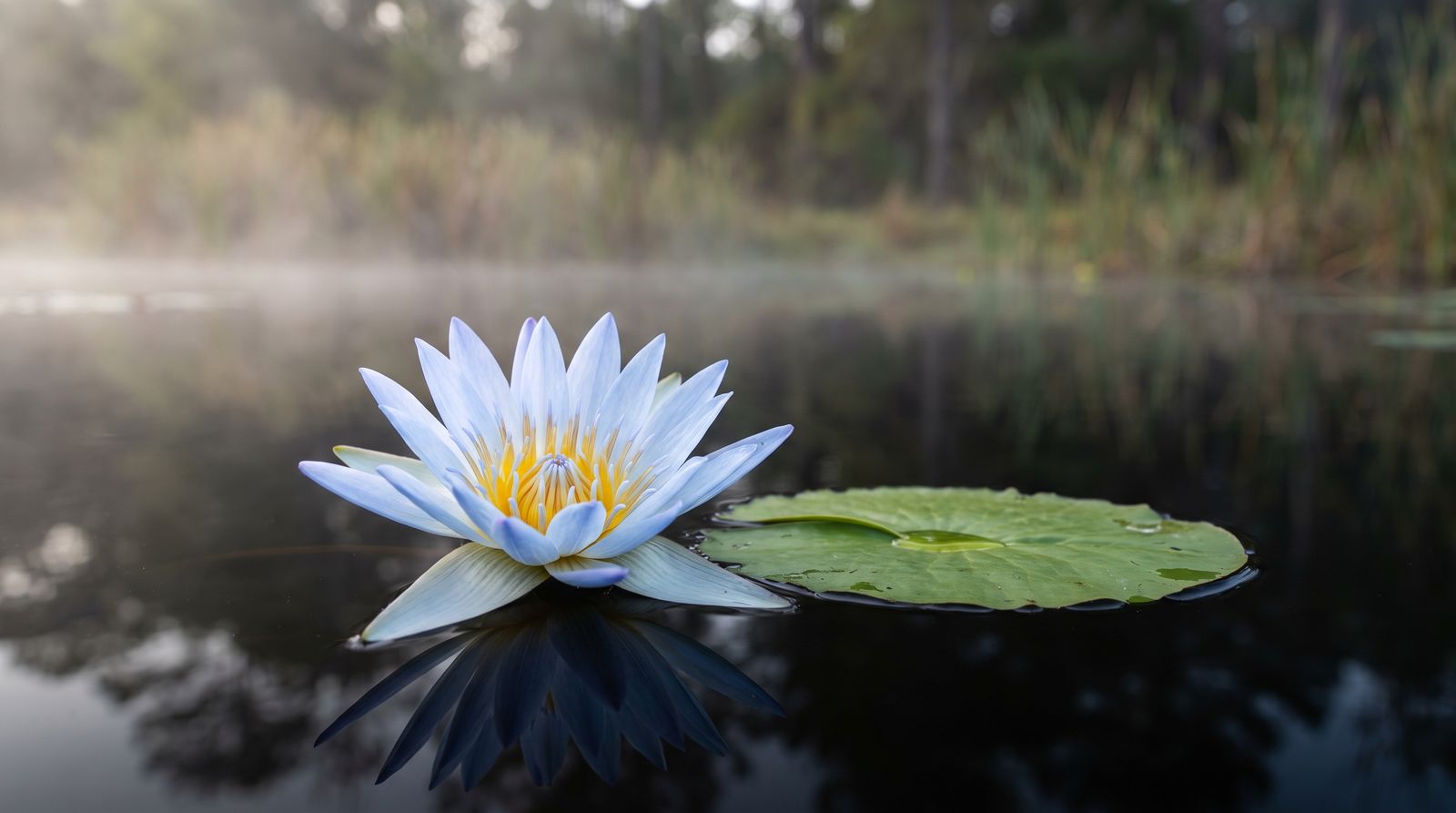
Despite the name, blue lotus is not a true lotus — it is a water lily in the family Nymphaeaceae.1 Its widely used name is Nymphaea caerulea, though the modern accepted botanical name is Nymphaea nouchali var. caerulea.2 Native from Egypt along the Nile south through eastern and southern Africa and into southern Arabia, it is a day-blooming water lily with pale blue to sky-blue petals fading to a pale-yellow center, roughly 8–12 cm across.1, 2
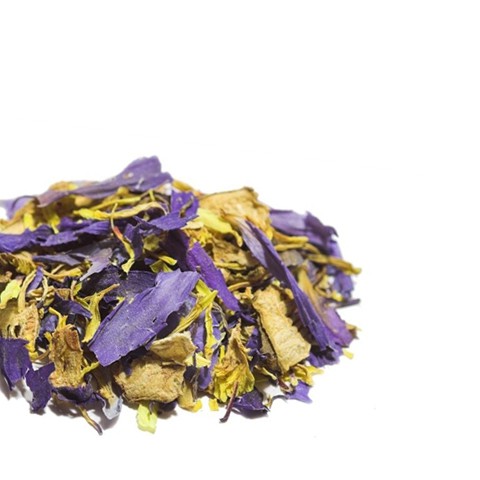
We carry it in a few forms: whole blue lotus flowers, hand-selected premium buds, milled powder, a concentrated extract, and a tincture in amber glass.
The flower of ancient Egypt
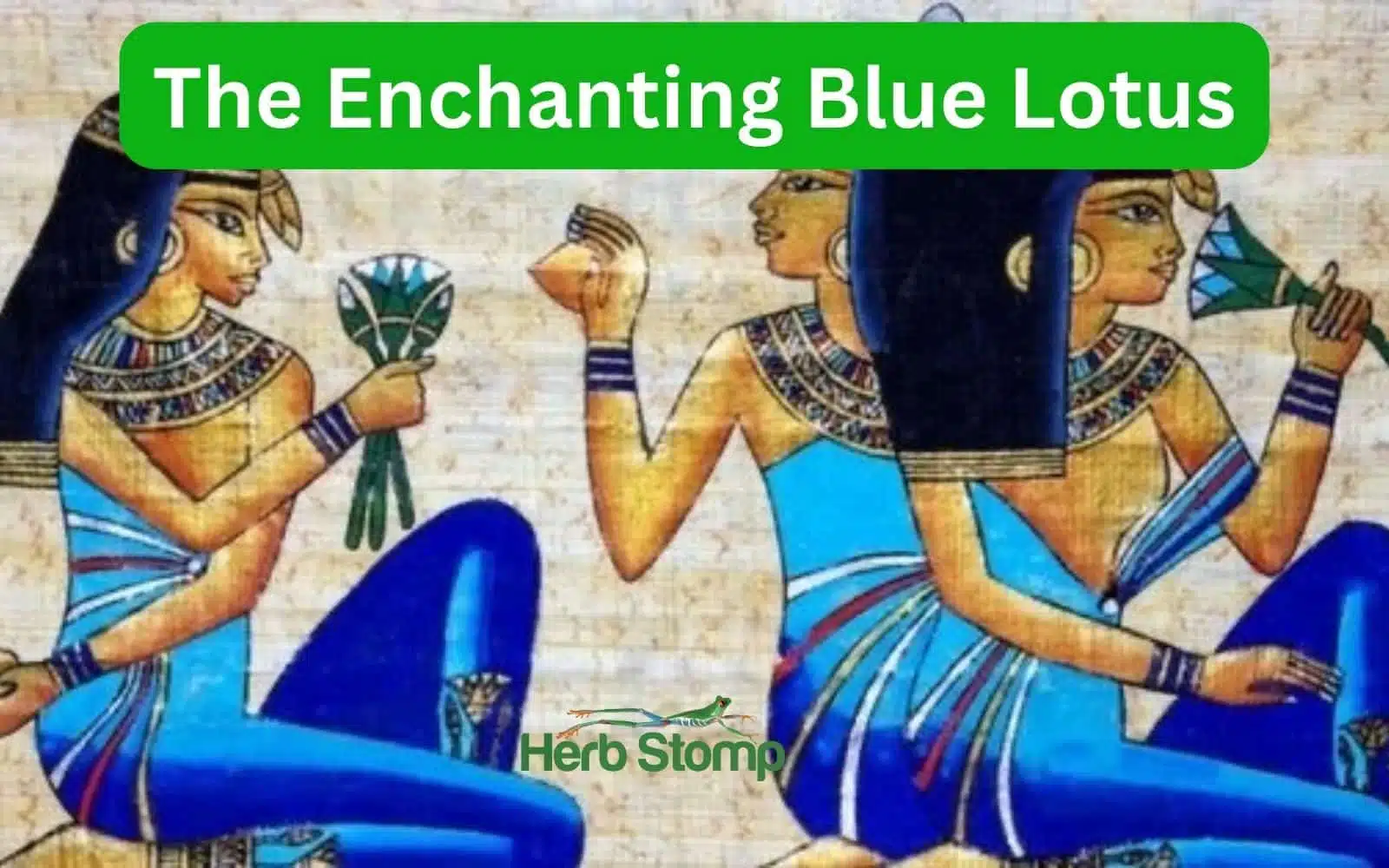
Blue lotus is inseparable from ancient Egypt. Peer-reviewed history notes that "the use of N. caerulea... in rites and rituals is depicted in the frescoes within the tombs, and in very early papyrus scrolls,"3 and drawings of the flower appear on Egyptian papyri and tombs dating to the 14th century BCE.4 In the famous banquet scene from the tomb-chapel of Nebamun (c. 1350 BCE), guests "wear garlands and smell lotus flowers" beside jars of wine.5 The flower opens at sunrise and closes at dusk, which tied it to the sun and to ideas of creation and rebirth.
How to make blue lotus tea
Historically, the flower was often steeped not in water but in wine — classical writers like Dioscorides and Avicenna described the Egyptian water lily infused in wine.6 Today most people make a simple hot-water infusion:
- Measure by weight. A few grams of dried flower or buds per cup. Because petals are light and fluffy, a "cup's worth" looks like a generous handful.
- Use just-off-boil water. Pour water that has come off the boil over the flowers in a mug or teapot.
- Steep 5–10 minutes, covered. Longer steeps draw out more flavor but can turn it bitter, so start on the shorter side.
- Strain and enjoy. Strain out the petals. Many people add honey or blend the petals into a herbal tea base.
The powder steeps faster; the extract and tincture are concentrated forms some people stir into an already-brewed cup.
Blue lotus vs. white lotus vs. pink lotus
These names get mixed up constantly, so here is the accurate version:
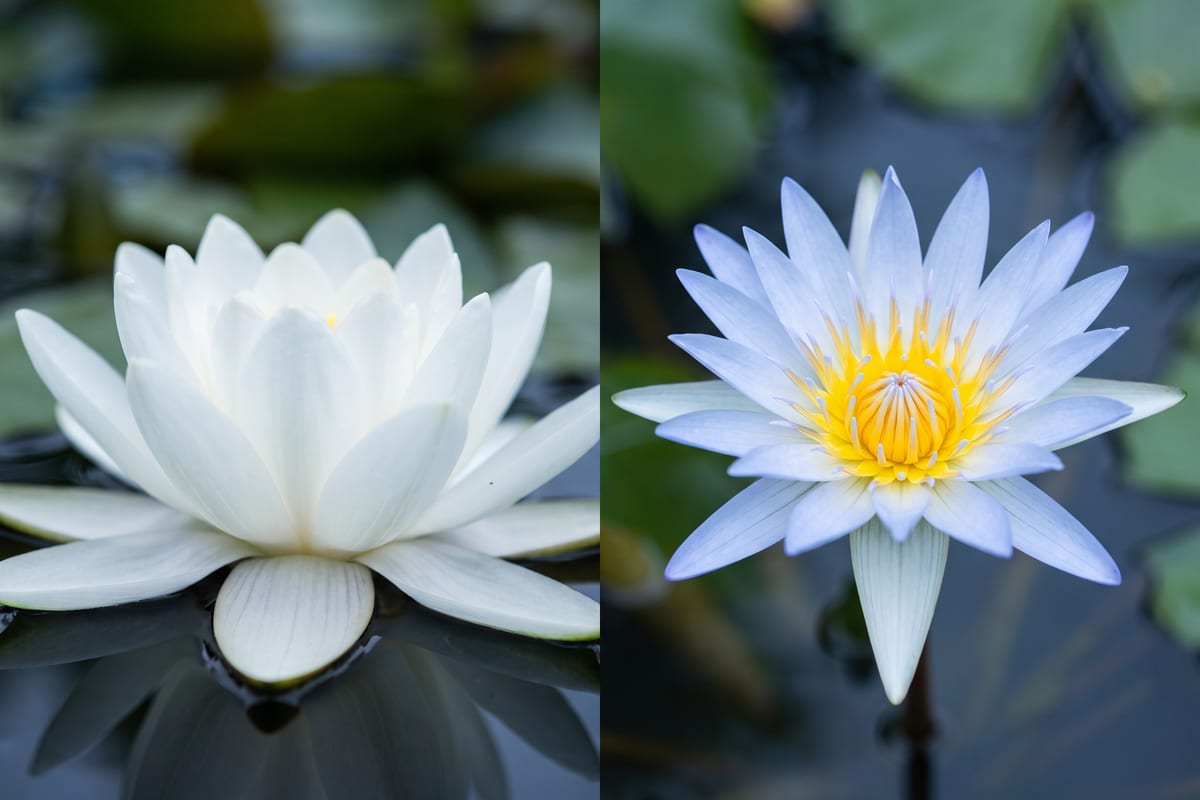
- Blue lotus — Nymphaea caerulea (a water lily, Nymphaeaceae). The Egyptian blue water lily, with pointed blue-violet petals.2
- White / Egyptian white lotus — Nymphaea lotus (also a water lily, Nymphaeaceae). A night-blooming white-flowered relative that grew along the Nile and appears in the same art.7
- Pink / sacred lotus — Nelumbo nucifera (a true lotus, in the separate family Nelumbonaceae). The lotus of Asia, botanically distinct from the water lilies above.8 We carry pink lotus as well.
Bottom line: both "Egyptian lotuses" (blue and white) are water lilies; only the Asian sacred/pink lotus is a botanically true lotus.
What does blue lotus tea taste like?
Descriptions vary, but the tea is generally mild and floral with a faintly earthy note, often compared to a light chamomile, with a clean, slightly sweet finish. It is not usually bitter unless over-steeped or over-packed. (Taste is subjective — there is no authoritative flavor standard.)
Is blue lotus legal?
In the United States, blue lotus is federally legal and is not a DEA-scheduled controlled substance.9 The one exception is Louisiana: under state law (La. R.S. 40:989.2, from Act 159 of 2005), Nymphaea caerulea is a prohibited plant product when intended for human consumption, with an explicit exemption for material used strictly for aesthetic, landscaping, or decorative purposes.10 Elsewhere it is sold as a botanical for traditional, ornamental, and educational use. The FDA has not approved blue lotus for human consumption.4 If you are outside the US, check your local rules before ordering.
How to store it
Keep dried flowers and powder sealed, cool, dry, and out of direct light — the same as any dried botanical. Keep the tincture tightly capped in its amber bottle.
Ready to try it? Browse our full blue lotus collection — flowers, buds, powder, extract, and tincture, shipped within 24 hours from our shop in Portland, Oregon.
Sources
- Kew, Plants of the World Online — Nymphaea nouchali var. caerulea (family Nymphaeaceae; native range). powo.science.kew.org
- "Nymphaea nouchali var. caerulea." Wikipedia (accepted name/synonymy, description). en.wikipedia.org
- Bertol E, et al. "Nymphaea cults in ancient Egypt and the New World." J R Soc Med, 2004 (PMC1079300). pmc.ncbi.nlm.nih.gov
- Dosoky NS, et al. Molecules 28(20):7014, 2023 (PMC10609367) — history + FDA status. pmc.ncbi.nlm.nih.gov
- British Museum / Google Arts & Culture, "A Feast for Nebamun" (c. 1350 BCE). artsandculture.google.com
- Gutierrez Haddad D. "The Lily of the Nile" (Uppsala University thesis, 2021) — historical wine-steeping, citing Dioscorides, Avicenna, and Emboden (1978). diva-portal.org
- "Nymphaea lotus" (Egyptian white water lily). Wikipedia. en.wikipedia.org/wiki/Nymphaea_lotus
- "Nelumbo nucifera" (sacred / Indian lotus, family Nelumbonaceae). Wikipedia. en.wikipedia.org/wiki/Nelumbo_nucifera
- Operation Supplement Safety (U.S. Dept. of Defense), "Blue lotus." opss.org
- Louisiana Revised Statutes 40:989.2 (from Act 159, 2005) — lists Nymphaea caerulea; exempts aesthetic/landscaping/decorative use. codes.findlaw.com