Buy Tea Tree Essential Oil (Australia) Online
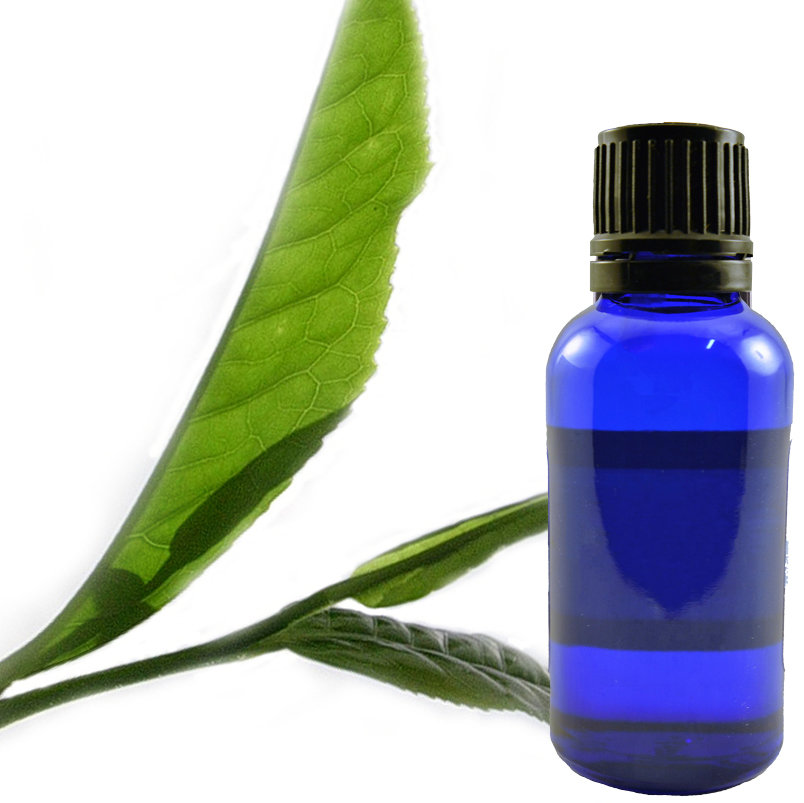
about this product
What is Tea Tree Essential Oil (Australia)?
Tea Tree Essential Oil (Australia) is the steam-distilled essential oil of Melaleuca alternifolia, in the Myrtaceae family, a plant native to coastal New South Wales and Queensland, Australia. It is drawn from the leaves of the plant. Tea tree is an Australian native, and its oil is one of the most studied essential oils.
About the oil
Tea tree essential oil is distilled from the leaves of Melaleuca alternifolia, a small tree native to coastal New South Wales and Queensland, Australia. Its principal compound is terpinen-4-ol, alongside 1,8-cineole and gamma-terpinene. Indigenous Australian use of tea tree leaves goes back thousands of years, and Western interest began in the 1920s with research by the Australian chemist Arthur Penfold.
Tea tree is one of the most studied essential oils and a common ingredient in topical and cleaning formulations.
Aroma and character
The aroma of tea tree oil is sharp, medicinal, herbaceous, and slightly camphoraceous.
Tea Tree Essential Oil (Australia): form and size
We carry Tea Tree Essential Oil (Australia) bottled as a single, unblended essential oil.
Safety and handling
Tea tree oil is for external use only and must never be swallowed, as internal consumption can cause serious neurological effects even in small amounts. Dilute in a carrier oil before any topical use, keep it away from the eyes, and store it out of reach of children and pets.
Tea Tree Essential Oil (Australia) at a glance
- Botanical name
- Melaleuca alternifolia
- Family
- Myrtaceae
- Origin
- coastal New South Wales and Queensland, Australia
- Plant part
- leaves
- Extraction
- Steam-distilled
- Primary compound
- Terpinen-4-ol (30-40%)
- Aroma
- sharp, herbaceous
Frequently asked questions
What plant does Tea Tree Essential Oil (Australia) come from?
Is Tea Tree Essential Oil (Australia) for internal use?
Do you ship Tea Tree Essential Oil (Australia) to my state?
Buy Tea Tree Essential Oil (Australia) Online
Orders ship within 24 hours of being placed.
Secure encrypted checkout
What customers say about our shop
4.8 stars across 284 Google reviewsBy far the best products I've ever tried! I've been a loyal customer for years now and refer everyone I can to HerbStomp. Their service is just as amazing as their products! You guys are making the world a better place and changing lives by offering quality, safe alternatives to traditional medicine. I can't thank you…
Every time I've gone into this shop. It's been absolutely flawless absolutely wonderful and absolutely magical and I so greatly appreciate the materials and the customer service. Let this business put forth. I hope they have many a decade in business to come. And I hope that that business sees them happier and more…
I go to the Herb Stomp locations on Belmont and Sandy. The staff there have always been knowledgeable, gracious, and welcoming. I particularly like discovering new products that I would not have ordering my purchases from an online vendor. 5/5 would go again.
also in tea