
Short answer: a standard drug test does not detect kratom. The routine panels used by most employers and clinics look for a fixed list of substances, and kratom's alkaloids are not on it. Below is a clear, source-based look at how kratom relates to drug testing — purely informational, not consumption advice.
Do standard drug tests detect kratom?
The most common workplace test is the 5-panel (the "SAMHSA-5"), which screens for marijuana (THC), cocaine, amphetamines, opiates, and PCP. Expanded 10-panel and 12-panel tests add classes like benzodiazepines, barbiturates, and methadone. None of these standard panels include kratom's alkaloids — mitragynine and 7-hydroxymitragynine. As the NIH's StatPearls reference states plainly, "kratom is not detected on regular drug screens," and screening for its use "is primarily based on patient disclosure."1
Is kratom an opiate? Will it fail the opiate test?
No. The opiate portion of a standard panel is calibrated to morphine-type molecules from the opium poppy, such as morphine and codeine. Mitragynine and 7-hydroxymitragynine are indole alkaloids — structurally unrelated to the morphinan opiates.2 They are often called "opioid-like" because they act as partial agonists at the body's mu- and delta-opioid receptors, but they are, in the words of the toxicology literature, "pharmacologically and structurally different" from classical opioids.1 Because the opiate immunoassay is built around morphine-like structures, kratom's dissimilar alkaloids do not reliably trigger it.2
Is there a kratom-specific test?
Yes, but it is uncommon. Specialized laboratories can screen for mitragynine and confirm it with mass spectrometry — LC-MS/MS or high-resolution LC-HRMS, sometimes GC-MS. There is no nationally harmonized cutoff; one peer-reviewed method used a routine screening cutoff of 100 ng/mL with confirmation down to 1 ng/mL.2 This dedicated testing shows up mainly in addiction medicine, forensic and medico-legal toxicology, and pain-management compliance monitoring — it has to be requested on purpose and is not part of routine workplace panels.2
How long do kratom's alkaloids stay in your system?
Detection depends entirely on whether a mitragynine-specific test is used. The best human data comes from a pharmacokinetic study of chronic users, which reported a terminal elimination half-life for mitragynine of about 23 hours (with wide individual variation).3 Other estimates in the literature range considerably, so treat it as a range rather than a single number. A roughly one-day half-life implies near-complete clearance in about five days for most people; clinical and toxicology sources commonly describe mitragynine as detectable on a specialized urine test for about one day up to a week after last use, longer in heavy chronic users. Those detection-window figures are clinical estimates, not a fixed laboratory value.
Can kratom cause a false positive?
It can, though it is uncommon. A peer-reviewed laboratory study found that kratom alkaloids cross-reacted with a common methadone-metabolite (EDDP) immunoassay: drug-free urine spiked with mitragynine and 7-hydroxymitragynine produced positive or indeterminate methadone screens, and in the authors' clinical samples, half of the specimens that screened positive for the methadone metabolite but were negative on confirmation actually contained kratom alkaloids.4 The takeaway: an immunoassay is only a screen, and a positive result is meant to be verified with confirmatory mass spectrometry, which distinguishes what is actually present.
Is kratom legal? (Updated September 27, 2026)
At the federal level, kratom is legal and unscheduled — it is not a controlled substance under the federal Controlled Substances Act.1 State law is where it gets complicated, and it has been changing quickly. As of September 2026, kratom is banned or prohibited from sale in eleven states: Alabama, Arkansas, California, Connecticut, Indiana, Kansas, Louisiana, Massachusetts, Tennessee, Vermont, and Wisconsin.5 A few recent moves are worth knowing:
- Louisiana added a full ban (Schedule I) effective August 1, 2025.6
- Connecticut moved kratom to Schedule I effective March 25, 2026.8
- Tennessee banned it effective July 1, 2026 — its law ("Matthew Davenport's Law") also covers 7-hydroxymitragynine (7-OH).7
- Kansas scheduled 7-OH effective July 1, 2026; because 7-OH occurs throughout the leaf, the state treats this as a kratom ban.5
- California prohibits the sale of kratom statewide under a state health-department order, rather than a criminal possession ban.9
- North Dakota banned kratom by executive action effective August 5, 2026. The September special session rejected a permanent ban and replaced the order with HB 1628, which regulates pure leaf with a 21+ age limit and a licensing program the attorney general is still writing rules for.10
- Massachusetts placed kratom, including the natural leaf, in Schedule I by emergency order effective August 28, 2026.11
- Rhode Island went the other way, repealing its ban and moving to a regulated, adults-21+ model effective April 1, 2026.5
Most other states allow kratom but regulate it under a Kratom Consumer Protection Act (KCPA) — rules covering labeling, purity, and a minimum purchase age.5 Individual counties and cities sometimes add their own restrictions, and laws change often, so verify your local rules before ordering. (This is general information, not legal advice.)
A note on 7-OH
You will see "7-OH" in the news. 7-hydroxymitragynine is a minor alkaloid present only in trace amounts in the natural leaf, but it is far more potent at opioid receptors than mitragynine.1 Recent federal and state action has targeted concentrated or semi-synthetic "enhanced 7-OH" products (tablets, shots, gummies) that boost it well above natural leaf levels — not the leaf itself. The American Kratom Association has supported that distinction.
The bottom line
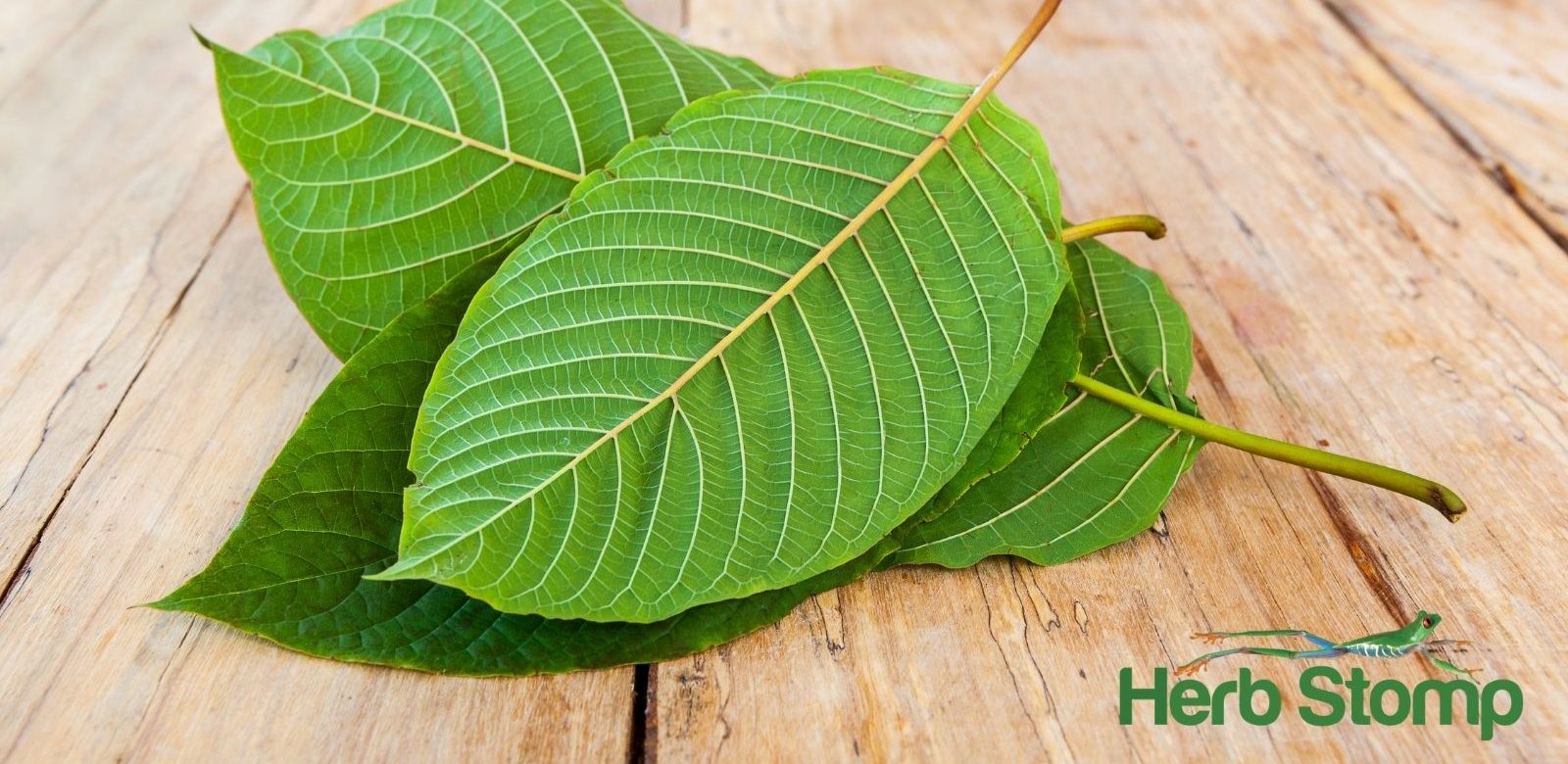
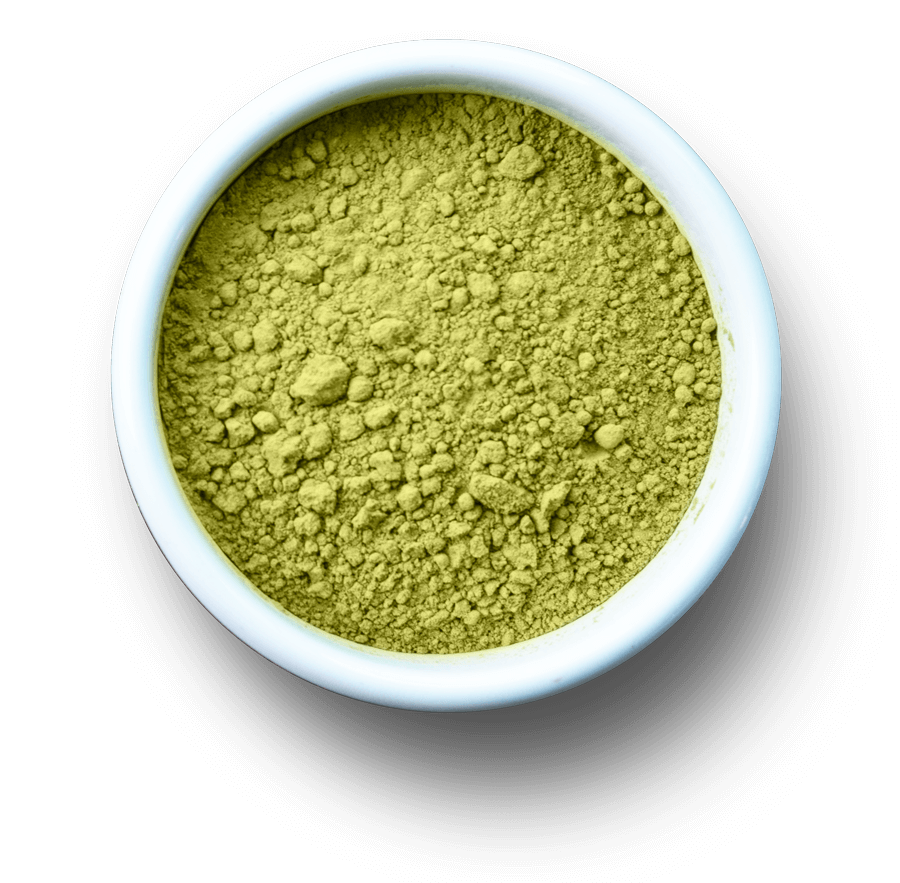
Kratom does not appear on the standard drug panels most people encounter, because those tests are not designed to look for its alkaloids. A dedicated kratom test exists but is rarely used outside specific programs. If you want to learn about the plant itself — vein colors, origins, and lineage — browse our kratom collection, all third-party lab tested with certificates of analysis available on request.
Sources
- Eggleston W, et al. "Kratom." StatPearls, NIH National Library of Medicine. ncbi.nlm.nih.gov/books/NBK585120
- "Drug testing for mitragynine and kratom: analytical challenges and medico-legal considerations." PMC. pmc.ncbi.nlm.nih.gov/articles/PMC10098727
- Trakulsrichai S, et al. "Pharmacokinetics of mitragynine in man." Drug Des Devel Ther, 2015. pubmed.ncbi.nlm.nih.gov/25995615
- Pierre C, Gineste C, Bazydlo L. "A Kratom Metabolite Causes False Positive Urine Drug Screening Results for Methadone." Am J Clin Pathol, 2020. academic.oup.com/ajcp
- Legislative Analysis and Public Policy Association (LAPPA), "Kratom: Summary of State Laws." legislativeanalysis.org
- Louisiana Department of Revenue, "New penalties for Kratom in effect Aug. 1" (2025). revenue.louisiana.gov
- Tennessee Public Chapter 950 (HB1649), "Matthew Davenport's Law." legiscan.com/TN/bill/HB1649
- Connecticut Department of Consumer Protection, controlled-substance schedule update (Public Act 25-101), 2026. portal.ct.gov/dcp
- Office of Governor Gavin Newsom, "Prohibition of illegal kratom products" (CDPH, Sherman Act), 2026. gov.ca.gov
- North Dakota Office of the Governor, "Armstrong, Wrigley announce executive actions to ban unregulated drug kratom amid growing concerns," August 3, 2026. governor.nd.gov; North Dakota HB 1628, Second Special Session, signed September 4, 2026. ndlegis.gov
- Massachusetts Department of Public Health, 105 CMR 726.00, "Temporary Placement of Kratom in Schedule I." mass.gov