
Mullein tea is a caffeine-free infusion of the dried leaf of common mullein, Verbascum thapsus. Making it takes about fifteen minutes and one step most guides rush past: straining out the fine leaf hairs. This guide covers how to make mullein tea from loose leaf or tea bags, what it tastes like, where the plant comes from, and what the research actually says, with sources.
How to make mullein tea from dried leaf
There is no official dose for mullein leaf tea. The steps below are the common home method.
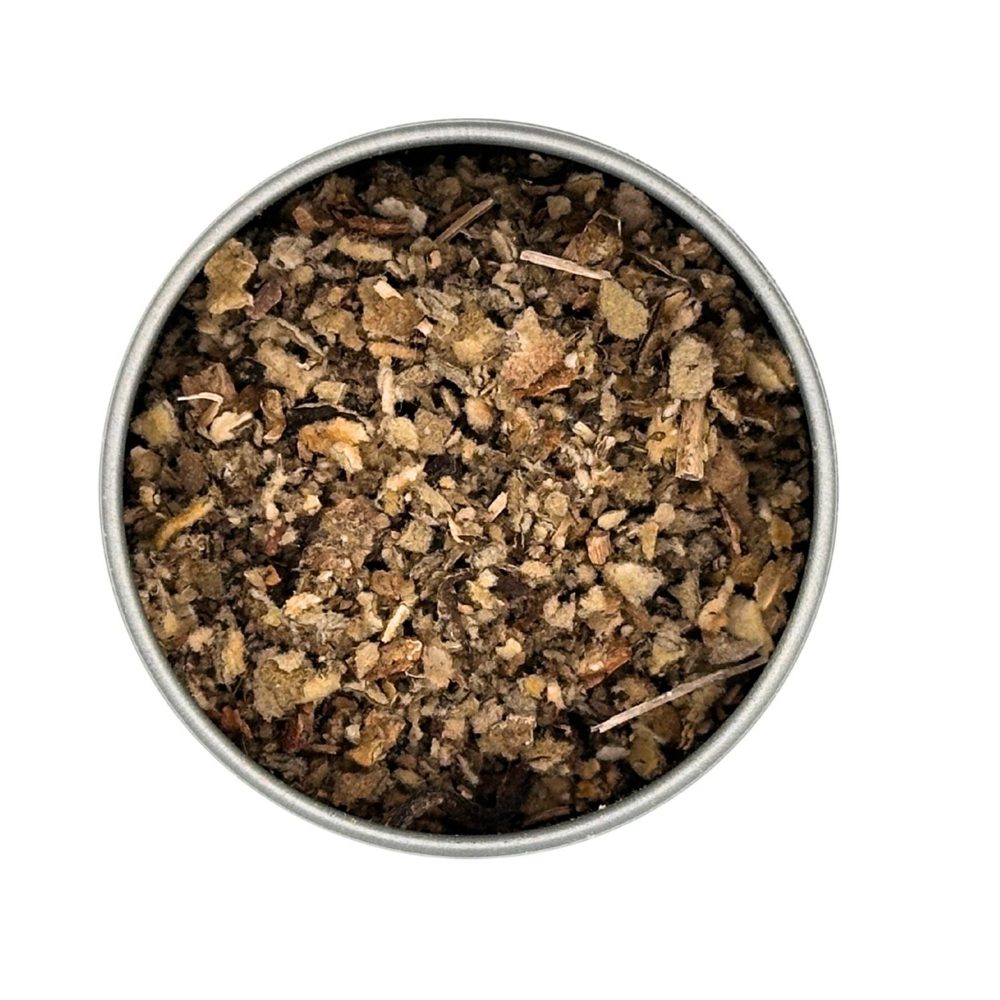
- Measure the leaf. Use 1 to 2 teaspoons of dried, cut mullein leaf per 8-ounce cup. Cut-and-sifted mullein is light and fluffy, so a level teaspoon looks like more than it is.
- Pour boiling water over it. Mullein is a leaf, not a delicate green tea, so water straight off the boil is fine.
- Cover and steep 10 to 15 minutes. Covering the cup keeps the heat in. Mullein stays mild even on a long steep, so there is little risk of turning it harsh.
- Strain through cloth or a paper filter. Pour it through a paper coffee filter, a cotton tea sock, or a doubled layer of fine muslin. A standard mesh strainer or tea ball lets the leaf hairs through.
- Sweeten if you like. Honey and a squeeze of lemon are the classic additions. Peppermint or a little ginger brewed alongside gives it more character.
Why you have to strain mullein tea
Mullein leaves are covered in a dense coat of branched, star-shaped hairs. Botanists call it a tomentum of stellate hairs, and it is what gives the fresh leaf its flannel feel.1, 2 Once the leaf is dried and cut, those hairs float free in the cup.
Herbalists have known this for a long time. Maud Grieve's A Modern Herbal (1931) says mullein tea "must indeed always be strained through fine muslin to remove any hairs," because otherwise "they cause intolerable itching in the mouth."3 A paper coffee filter is the easy modern version. If your cup leaves a scratchy feeling at the back of the throat, the strain was not fine enough.
Mullein tea bags: the shortcut
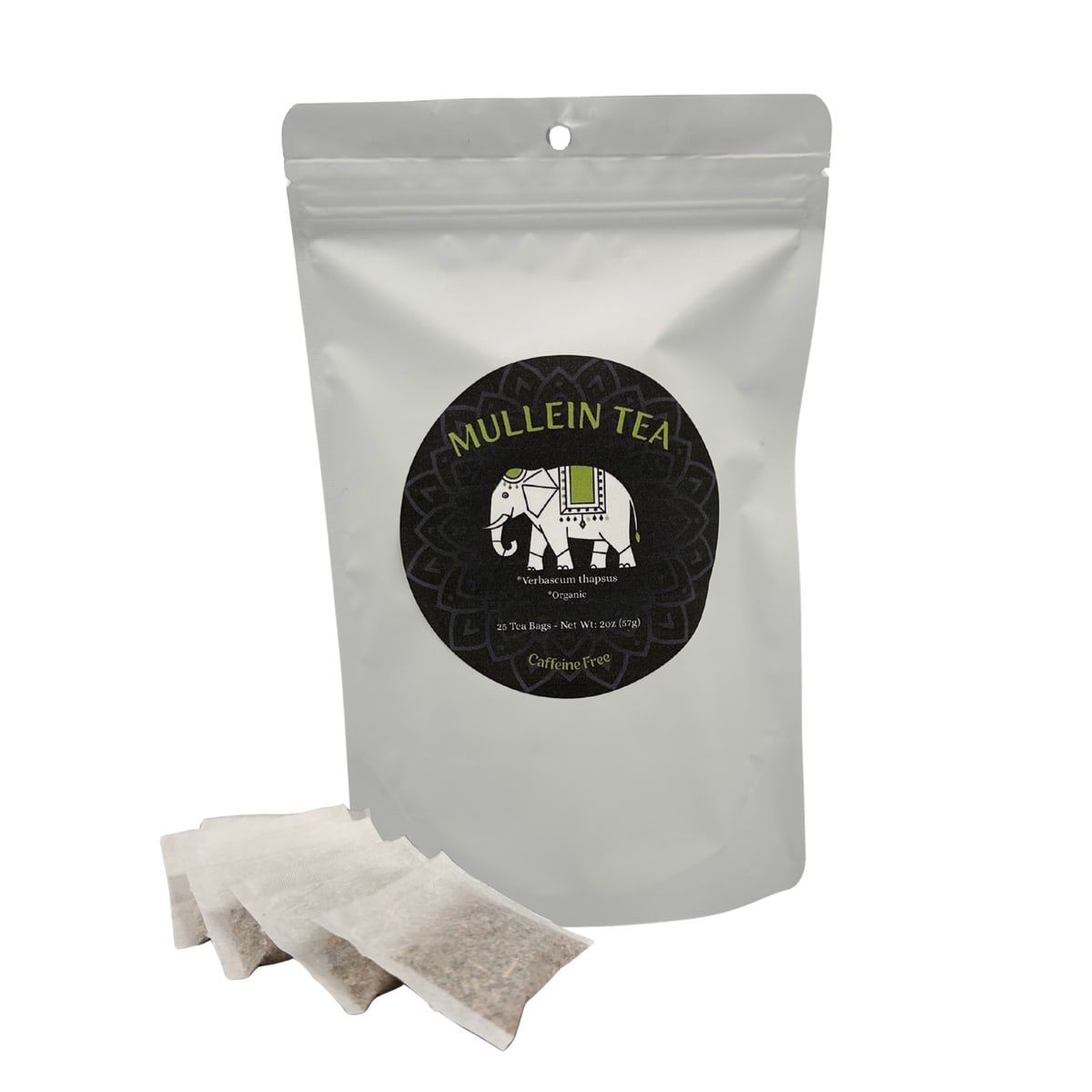
If you would rather skip the filter, mullein tea bags do the straining for you. The paper bag holds the leaf hairs in, so you steep it like any other herbal tea and lift it out. Ours are organic Verbascum thapsus leaf, 25 bags to a resealable pouch, in unbleached paper bags with no strings or staples.
Loose leaf is the better buy if you drink mullein often or want to blend it yourself. Bags win for travel, the office, or anyone who does not want to keep coffee filters next to the kettle.
What does mullein tea taste like?
Mild. Mullein brews into a pale gold cup with a soft, hay-like, faintly earthy flavor and a smooth, slightly silky body. Grieve described the dried leaves as "nearly odourless and of a mucilaginous and bitterish taste," and the bitterness is slight once it is steeped.3 The silky texture comes from the mucilage, a water-soluble plant fiber that makes up a few percent of the plant.4
On its own it is a quiet tea. That is why so many people treat it as a base and add honey, lemon, peppermint, or ginger.
What is mullein?
Common mullein, also called great mullein, woolly mullein, or flannel plant, is a member of the figwort family, Scrophulariaceae.1, 5 It is native from the Azores and Europe east to Siberia and the Himalaya.6 It was probably brought to North America several times as a medicinal herb, and it now grows wild along roadsides and in disturbed ground across the US and Canada.1, 7
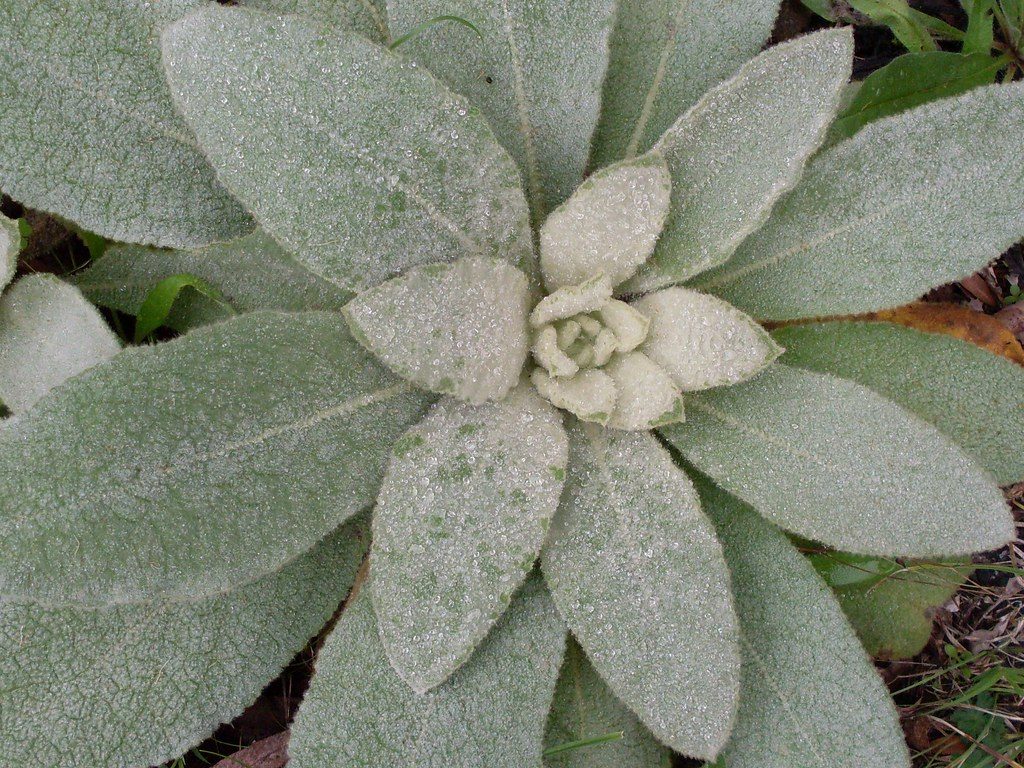
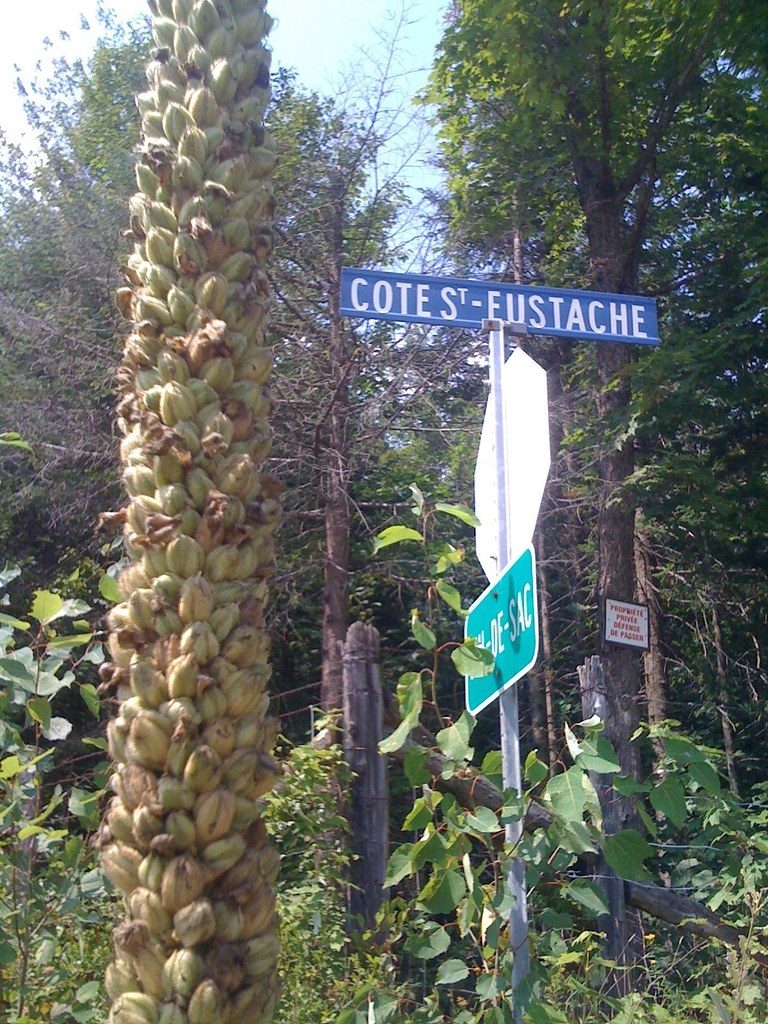
Mullein is a biennial. In its first year it grows a low, flat rosette of large felted leaves, like the one in the photo at the top of this page. In its second year it sends up a single stout flowering stalk that can stand taller than a person, lined with small yellow flowers.1 The leaves used for tea are usually harvested from the rosette, before the stalk takes over.
A long history in the herb cupboard
Mullein shows up in the historical record well beyond the teacup. Its old English names include hag's taper, candlewick plant, and torches. The leaf down was once used for lamp wicks, and the dried stalks were dipped in suet or tallow and burned as torches, a practice that goes back to the Romans.1, 3
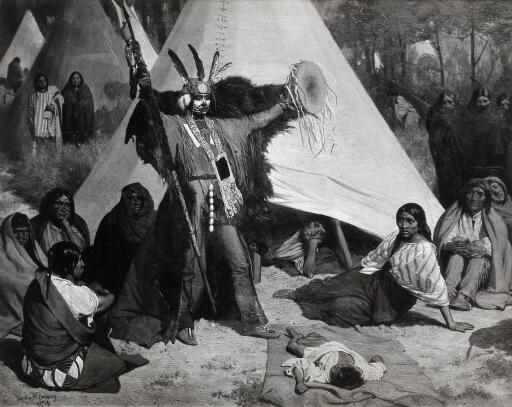
As a drink, Grieve called mullein tea "a remedy of the greatest antiquity for coughs and colds" in European folk practice.3 After the plant reached North America, several Native nations took it up. Moerman's Native American Ethnobotany database records a Mohegan leaf infusion for coughs, a Cherokee leaf decoction sweetened with honey as a cough syrup, and leaf smoking among the Ramah Navajo, Menominee, and others.8 That smoking tradition is why mullein still turns up in herbal smoking blends today.
What the research says about mullein tea
This is the part most mullein tea pages skip, so here it is plainly.
The European Medicines Agency has an official herbal monograph for mullein flower, not leaf. It accepts the flower as a "traditional herbal medicinal product used to relieve symptoms of sore throat associated with dry cough and cold," and states that this is "exclusively based upon long-standing use," not clinical trials.4 The agency's own assessment report found no clinical studies of mullein flower at all.9
We could not find a single published human trial of mullein tea, or of mullein leaf, for coughs, the lungs, or anything else respiratory. What exists is laboratory and animal work on the plant's compounds, including mucilage, saponins, iridoids such as aucubin, and verbascoside.9, 10 Those findings are interesting, and they are not the same as evidence that a cup of tea does something in a person.
So treat claims that mullein "detoxes" or "cleans out" the lungs as marketing, not science. We sell mullein as a traditional herbal tea and make no health or therapeutic claims for it.
Who should skip mullein tea
- Pregnant or breastfeeding. The EMA monograph says safety "has not been established" and does not recommend it.4
- Children under 12. The same monograph does not recommend the flower preparation for this age group.4
- Anyone sensitive to the plant. Contact dermatitis from handling mullein is uncommon but documented in case reports.11 Stop if you react.
- Anyone treating a real illness. A cough that lasts more than a week, or comes with a fever or shortness of breath, is a reason to see a doctor, not to brew more tea.4 Check with your doctor or pharmacist before adding any herb if you take prescription medication.
One more point: tea is made from the leaf. Mullein seeds were historically crushed and used to stun fish, and they are not something to brew.1
Buying mullein: make sure it is actually mullein
Buy from a seller who names the species. Mullein is sold in Latin American markets as gordolobo, and that name has been applied to more than one plant. A 1977 case report in Gastroenterology describes an infant in Arizona who developed serious liver disease after being given a "gordolobo yerba" folk tea. The poisoning was traced to a Senecio plant, not mullein at all.12 Our mullein leaf is organic Verbascum thapsus, labeled by its botanical name.
How to store mullein leaf
Keep dried mullein in an airtight jar or the resealable pouch, away from heat, light, and humidity. Stored that way it keeps its color and flavor for many months. If the leaf smells musty or looks damp, throw it out.
The short version
To make mullein tea, steep 1 to 2 teaspoons of dried leaf in a cup of boiling water, covered, for 10 to 15 minutes, then strain it through a paper filter or fine cloth to catch the leaf hairs. Or use tea bags and skip the filter. It is a mild, smooth, caffeine-free cup with a long folk history and very little clinical research behind it.
Shop organic mullein leaf, mullein tea bags, or Lung Tea, our house blend built around mullein with peppermint and plantain leaf. Browse the rest of our loose leaf and herbal teas. Orders ship within 24 hours from our shop in Portland, Oregon.
Sources
- Gucker, Corey L. 2008. "Verbascum thapsus." Fire Effects Information System, USDA Forest Service. fs.usda.gov
- "Verbascum thapsus" factsheet (stellate hairs). Flora of New Zealand. nzflora.info
- Grieve, Maud. "Mullein, Great." A Modern Herbal (1931). botanical.com
- European Medicines Agency, HMPC. "European Union herbal monograph on Verbascum thapsus L., V. densiflorum Bertol., V. phlomoides L., flos." EMA/HMPC/611537/2016 (2018). ema.europa.eu
- "Verbascum thapsus L., common mullein." USDA PLANTS Database. plants.usda.gov
- "Verbascum thapsus L." Plants of the World Online, Royal Botanic Gardens, Kew. powo.science.kew.org
- "Common mullein, Verbascum thapsus." University of Wisconsin–Madison Extension. hort.extension.wisc.edu
- Moerman, Daniel. Native American Ethnobotany database, search "Verbascum thapsus." BRIT. naeb.brit.org
- European Medicines Agency, HMPC. "Assessment report on Verbascum thapsus L., V. densiflorum Bertol., V. phlomoides L., flos." ema.europa.eu (PDF)
- Gupta, A., Atkinson, A.N., Pandey, A.K. et al. 2022. "Health-promoting and disease-mitigating potential of Verbascum thapsus L. (common mullein): a review." Phytotherapy Research. PubMed 35088467
- Flores Echaiz, C. et al. 2017. "Simultaneous contact dermatitis caused by Asteraceae and Verbascum thapsus." Contact Dermatitis 76(5). PubMed 28386973
- Stillman, A.S. et al. 1977. "Hepatic veno-occlusive disease due to pyrrolizidine (Senecio) poisoning in Arizona." Gastroenterology. PubMed 873137
Header photo: "Great mullein rosette" by John Tann, licensed CC BY 2.0. Source.