
If you have searched what is kanna, here is the plain answer: kanna is Sceletium tortuosum, a small ground-hugging succulent native to South Africa with one of the best-documented traditions of any African botanical. This guide covers what the plant actually is, where it comes from, how it has traditionally been prepared, the forms it is sold in today, and its legal status — with sources throughout. It is informational only, not health or usage advice.
What is kanna, exactly?
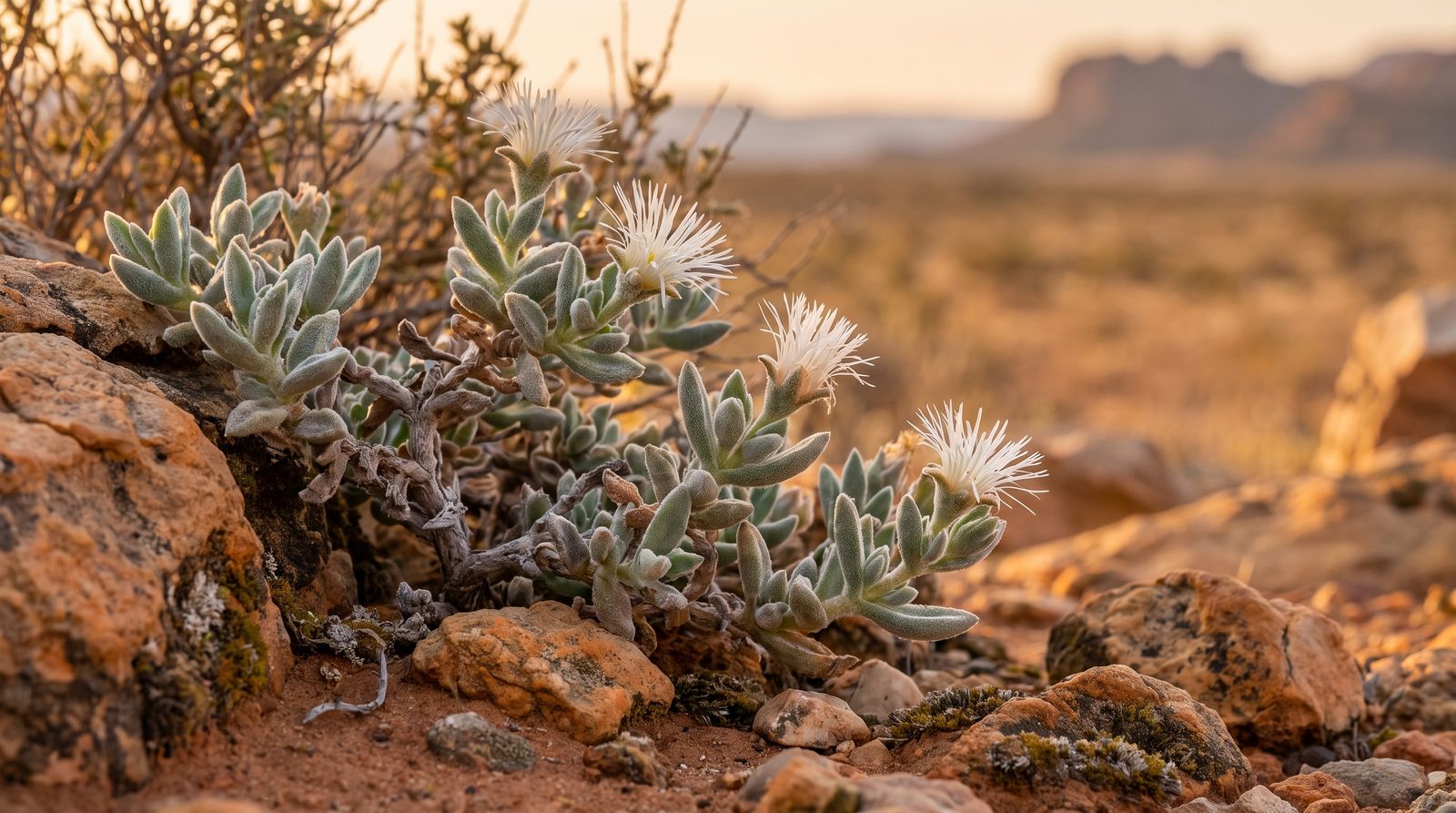
Kanna is the common name for Sceletium tortuosum, a low, creeping succulent in the family Aizoaceae (the ice-plant family).1 It grows in the arid and semi-arid regions of South Africa — particularly the Cape — where it survives long dry spells the way other succulents do, by storing water in its fleshy leaves.1 The name is sometimes spelled "channa," and the plant is also called "kougoed" in Afrikaans, roughly "something to chew."2
The plant's active constituents are a group of alkaloids — the best known being mesembrine — concentrated in the leaves and stems.2 The plant itself is small and unassuming; its significance comes from its long human history, not its appearance.
A South African tradition
Kanna has a documented history of traditional use among the San and Khoikhoi peoples of South Africa that reaches back centuries; the earliest European written records of it date to the seventeenth century.2 Traditionally the plant material was fermented — crushed and left to cure in a process the sources describe as key to how the plant was prepared — and then dried for later use.2 That fermentation step is part of what distinguishes traditionally prepared kanna from raw plant material.
This deep ethnobotanical record is exactly why kanna sits in the "ethnobotanical" category alongside plants like wild dagga and blue lotus: it is a plant defined by its cultural and historical use.
What forms does kanna come in?
Kanna is sold as a few different preparations of the same plant material:
- Powder — the finely milled plant material, the most versatile form.
- Coarse-cut — a coarser cut of the leaf and stem material, sourced directly from a South African partner.
- Tincture — an alcohol-based liquid preparation in a dropper bottle.
All three are the same species — Sceletium tortuosum — in different physical forms. Which one people reach for is generally a matter of preference for working with a powder, a coarser material, or a liquid.
How do you say it, and how is it spelled?
You will see kanna written several ways online. The most common are:
- Kanna — the standard modern spelling.
- Channa — an older variant spelling of the same name.
- Kougoed — the Afrikaans name, meaning roughly "chewable thing" or "something to chew."2
- Sceletium or Sceletium tortuosum — the botanical name, often shortened to just "sceletium."
They all refer to the same plant.
Is kanna legal?
In the United States, kanna (Sceletium tortuosum) is legal at the federal level and is not a DEA-scheduled controlled substance. It is sold as a botanical for traditional, educational, and collector use. The notable exception is Louisiana: under the state's prohibited-plant law (La. R.S. 40:989.2), Sceletium tortuosum is restricted when intended for human consumption, with an exemption for aesthetic or decorative use.3 Because of that, we do not ship kanna to Louisiana. If you are outside the US, check your local rules before ordering. This is general information, not legal advice.
How to store kanna
Keep the powder and coarse-cut material sealed, cool, dry, and out of direct light, like any dried botanical. Store the tincture tightly capped in its bottle, away from heat and sunlight.
The short version
Kanna is Sceletium tortuosum, a South African succulent with a centuries-long tradition among the San and Khoikhoi peoples, historically fermented and dried before use. It is federally legal in the US (Louisiana excepted) and sold today as powder, coarse-cut material, and tincture.
Want to explore it? Browse our kanna options — powder, coarse-cut, and tincture — or see the full ethnobotanicals collection, shipped within 24 hours from Portland, Oregon.
Sources
- "Sceletium tortuosum" (family Aizoaceae; South African succulent; description and range). Wikipedia. en.wikipedia.org/wiki/Sceletium_tortuosum
- Gericke N, Viljoen AM. "Sceletium — a review update." Journal of Ethnopharmacology, 2008 (traditional San/Khoikhoi use, fermentation, "kougoed," mesembrine alkaloids). pubmed.ncbi.nlm.nih.gov/18761074
- Louisiana Revised Statutes 40:989.2 (prohibited plant products) — lists Sceletium tortuosum; exempts aesthetic/decorative use. codes.findlaw.com