
People searching Egyptian white lotus vs. blue lotus usually want to know one thing: are these the same plant, and if not, how do they differ? The short answer is that they are two different water lilies that grew side by side along the Nile and appear together in ancient Egyptian art — but they are distinct species with different colors and different daily rhythms. Here is the accurate breakdown, with sources.
They are both water lilies, not true lotuses
First, a naming point that clears up most of the confusion: neither the "blue lotus" nor the "white lotus" of Egypt is a true lotus. Both are water lilies in the genus Nymphaea (family Nymphaeaceae).1, 2 The true lotus — the pink sacred lotus of Asia — is Nelumbo nucifera, a plant in an entirely separate family.3 So when you see "Egyptian lotus," it almost always means one of these two Nile water lilies.
Blue lotus — Nymphaea caerulea
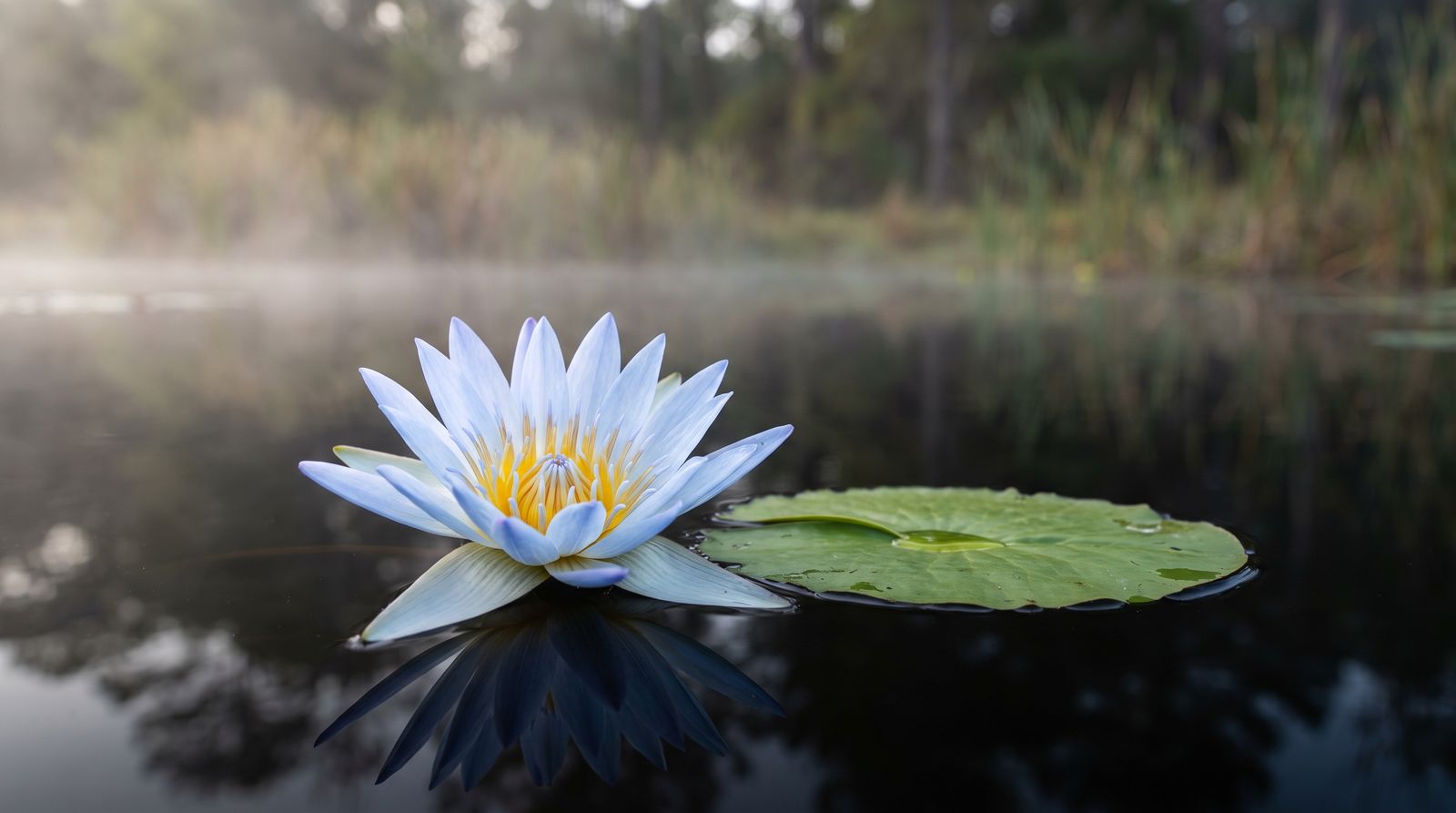
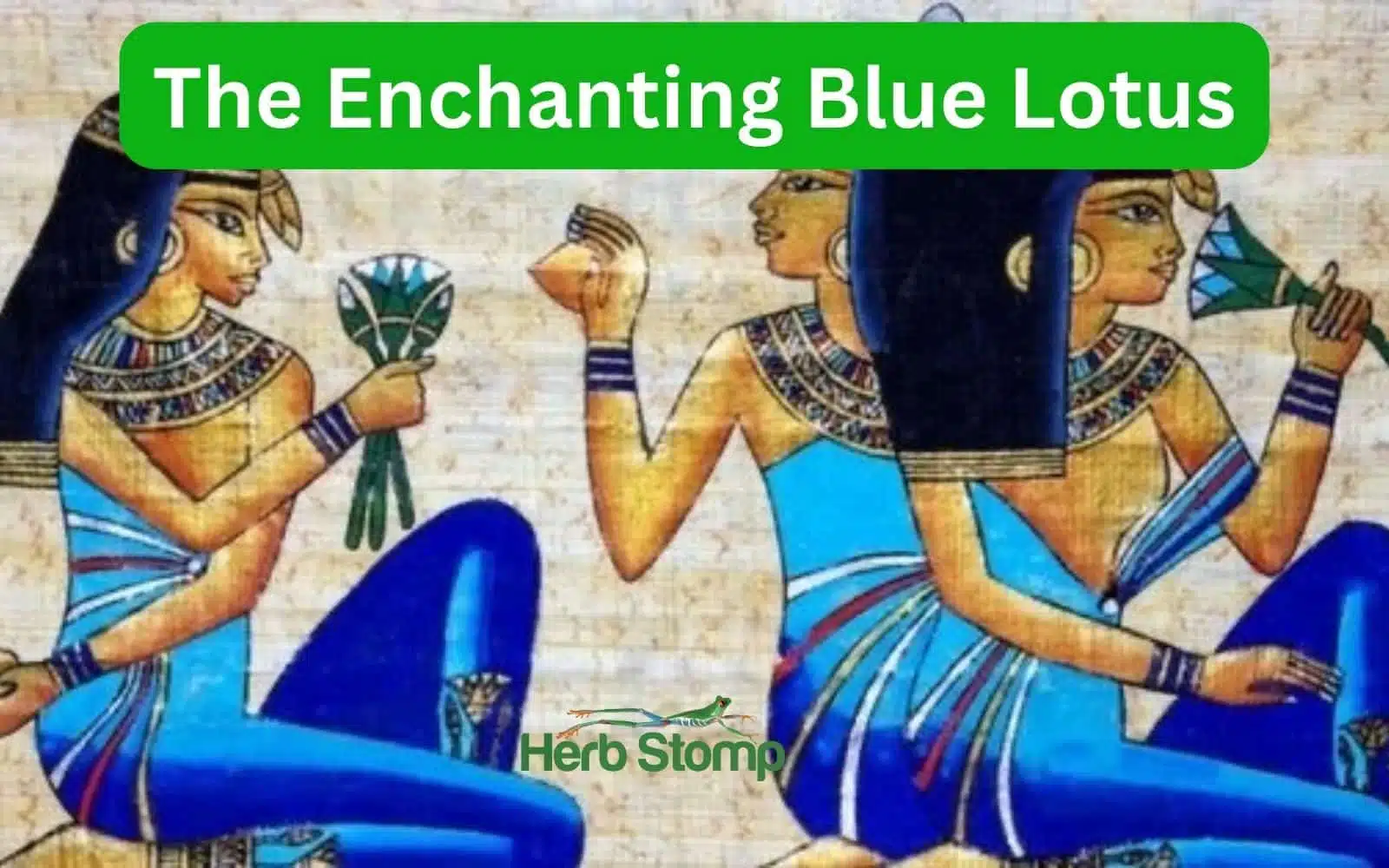
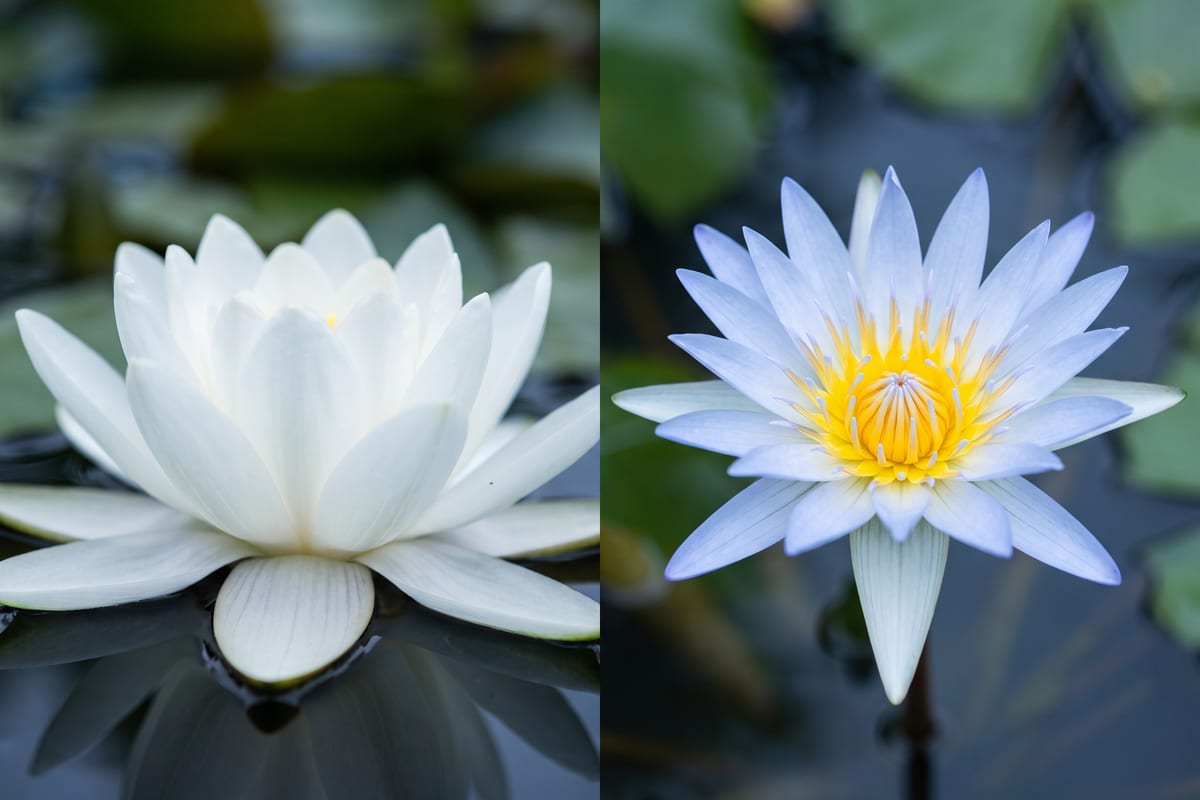
The blue lotus is Nymphaea caerulea (accepted name Nymphaea nouchali var. caerulea).1 Its petals are pointed and pale blue to sky-blue, fading to a yellow center, and the flower is a day bloomer — it opens in the morning and closes by afternoon.1 That sunrise-to-sunset rhythm is exactly why the Egyptians linked it to the sun and to rebirth. It is the flower most often pictured in banquet and funerary scenes. For the full story on this species, see our guide on what blue lotus is.
White lotus — Nymphaea lotus
The Egyptian white lotus is Nymphaea lotus, the white-flowered water lily of the Nile.2 Its blooms are white (sometimes with a pink tinge) and its petals are more rounded than the blue lily's pointed ones. Crucially, it is generally a night bloomer — it tends to open in the evening and close in the morning, the mirror image of the blue lotus's schedule.2 Both grew in the same waters, so Egyptian art frequently shows the two together.
White lotus vs. blue lotus at a glance
| Blue lotus | Egyptian white lotus | |
|---|---|---|
| Botanical name | Nymphaea caerulea | Nymphaea lotus |
| Family | Nymphaeaceae (water lily) | Nymphaeaceae (water lily) |
| Flower color | Pale to sky-blue, yellow center | White, sometimes pink-tinged |
| Petal shape | Pointed, narrow | Rounder, broader |
| Bloom time | Day (opens at sunrise) | Night (opens in the evening) |
| A true lotus? | No — a water lily | No — a water lily |
What about the pink "sacred lotus"?
The pink lotus you see in Asian art and Buddhist symbolism is a third, unrelated plant: Nelumbo nucifera, the sacred or Indian lotus.3 Unlike the two Egyptian water lilies, it is a genuine botanical lotus in the family Nelumbonaceae, with leaves and flowers that stand well above the water rather than floating on it. We carry it as pink lotus for people who want that specific flower.
Which one do people usually mean?
In modern botanical shops, "blue lotus" almost always refers to Nymphaea caerulea — the blue Egyptian water lily — because that is the flower with the deep Egyptian association and the recognizable blue color. The white lotus (Nymphaea lotus) is the historical companion species. Both are federally legal in the US and not DEA-scheduled, with Louisiana the notable exception under its prohibited-plant law.4, 5
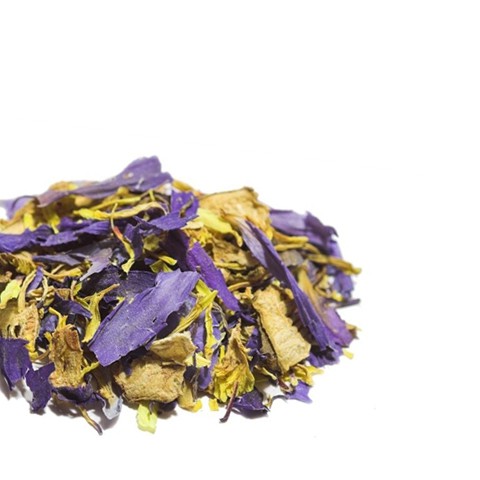
Want to work with the blue Egyptian water lily? Browse our blue lotus collection — whole flowers, premium buds, powder, extract, and tincture, shipped within 24 hours from Portland, Oregon.
Sources
- "Nymphaea nouchali var. caerulea" (blue Egyptian water lily; day-blooming; description). Wikipedia / Kew POWO. en.wikipedia.org
- "Nymphaea lotus" (Egyptian white water lily; night-blooming). Wikipedia. en.wikipedia.org/wiki/Nymphaea_lotus
- "Nelumbo nucifera" (sacred / Indian lotus, family Nelumbonaceae). Wikipedia. en.wikipedia.org/wiki/Nelumbo_nucifera
- Operation Supplement Safety (U.S. Dept. of Defense), "Blue lotus" (federal legal status). opss.org
- Louisiana Revised Statutes 40:989.2 — lists Nymphaea caerulea; exempts aesthetic/landscaping/decorative use. codes.findlaw.com