★★★★★ SEBASTIAN N. ✓ Verified buyer 2026-09-20
Great quality and price!
Ordered: Betel Nut - 1 Oz
Third-Party Lab Tested
Independent lab COA available on request
about this product
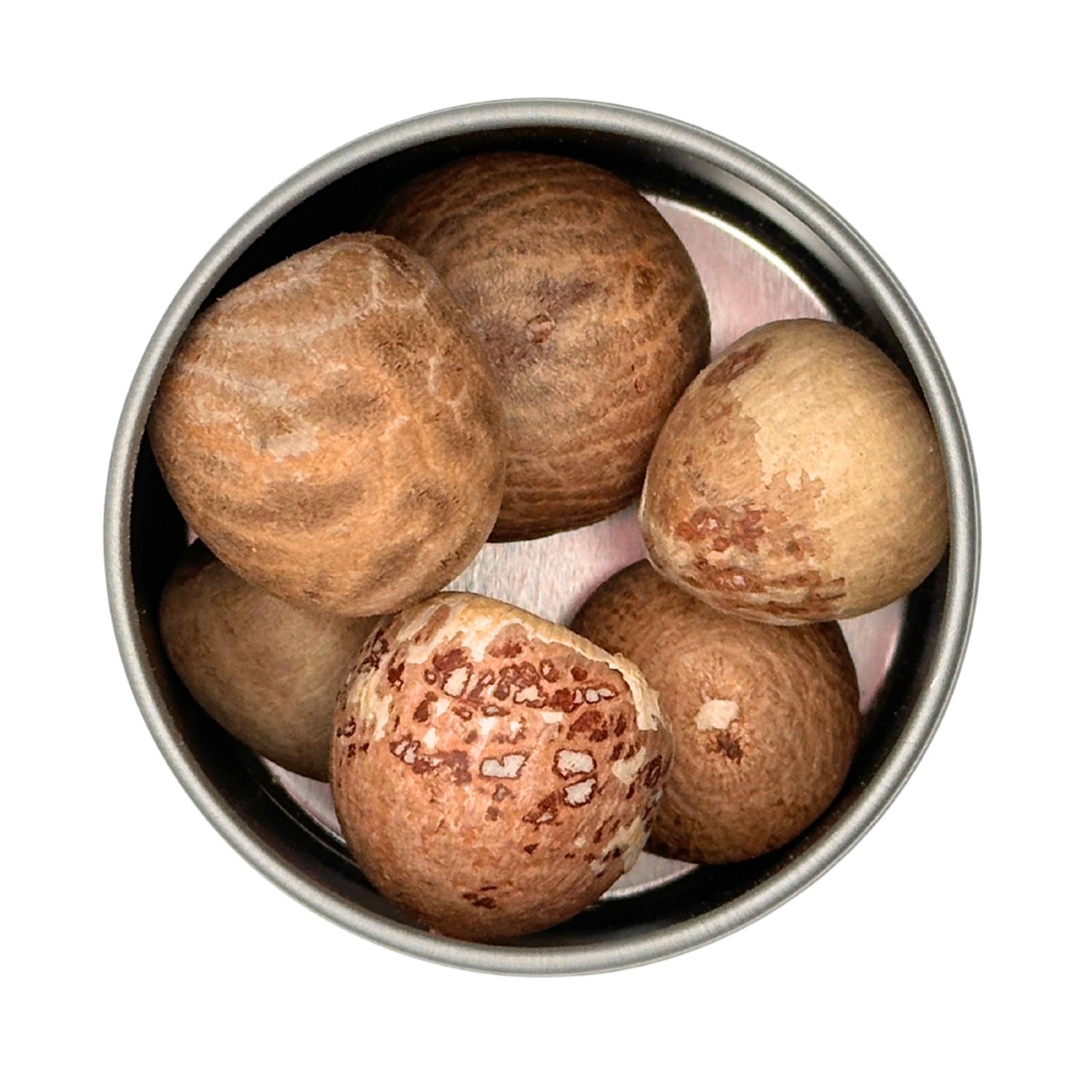
Betel Nut is the dried seed of the areca palm, Areca catechu, a tropical palm in the palm family (Arecaceae) native to South and Southeast Asia. It is also widely known as areca nut. We carry it as a botanical specimen for cultural, ceremonial, and ethnographic study.
The World Health Organization has classified betel nut as a Group 1 carcinogen, based on epidemiological evidence linking long-term chewing of "betel quid" with oral cancers. We offer the nut for its documented cultural and historical significance only, and we do not recommend regular consumption of it.
The areca palm grows across tropical South and Southeast Asia. The nut has a long-documented cultural and traditional history across India, Southeast Asia, the Pacific Islands, and parts of East Africa, where it has historically been combined with betel leaf (Piper betle) and lime in a preparation known as "betel quid." That cultural history is why it appears throughout the ethnobotanical literature of the region.
We supply whole dried Betel Nut by weight in 1 oz, 4 oz, and 8 oz sizes, sold as a botanical specimen for educational and ethnographic purposes. We make no health or therapeutic claims.
Store Betel Nut in an airtight container, away from heat, light, and humidity.
Betel nut (Areca catechu) is the subject of a US Food and Drug Administration import alert. Long-term chewing is associated in the published literature with oral submucous fibrosis and with cancers of the mouth and oesophagus, and the alkaloid arecoline it contains has reported cytotoxic, genotoxic, mutagenic, and carcinogenic effects. Sold for educational and research purposes. Not for use if you are pregnant or nursing. 21+ only.
Select a size
what buyers say
Great quality and price!
Ordered: Betel Nut - 1 Oz
Good herb selection; reasonable prices. Lots of loose herbs, tinctures, smudge/incense, pipes. By herbs I mean various medicinal and alchemical herbs - I bought some lemon balm, organic roses, and lemongrass as well and bundles white sage and white pine. Good source for alternative/complimentary smoking herbs as well…
Herb Stomp (Sandy) is BY FAR the best Herb and Kratom store I have ever been to. In my 2.5 years of using Kratom, I have never been to a place as helpful as this! The employees are so so helpful! Usually when buying Kratom, I’m met with grumpy head shop owners who seem to want me to either spend out of my budget, or…
Awesome, knowledgeable staff. Great selection and quality of herbs and ethnobotanicals. I also appreciate that testing is done for contaminants and potency on certain herbs. In 8 years coming here I have yet to purchase anything stale or otherwise questionable quality. We technically *could* ask for more in a local…
also in herbs & spices