
Buy Anise Star - Whole Online
Third-Party Lab Tested
Independent lab COA available on request
about this product
What is Star Anise, Whole?
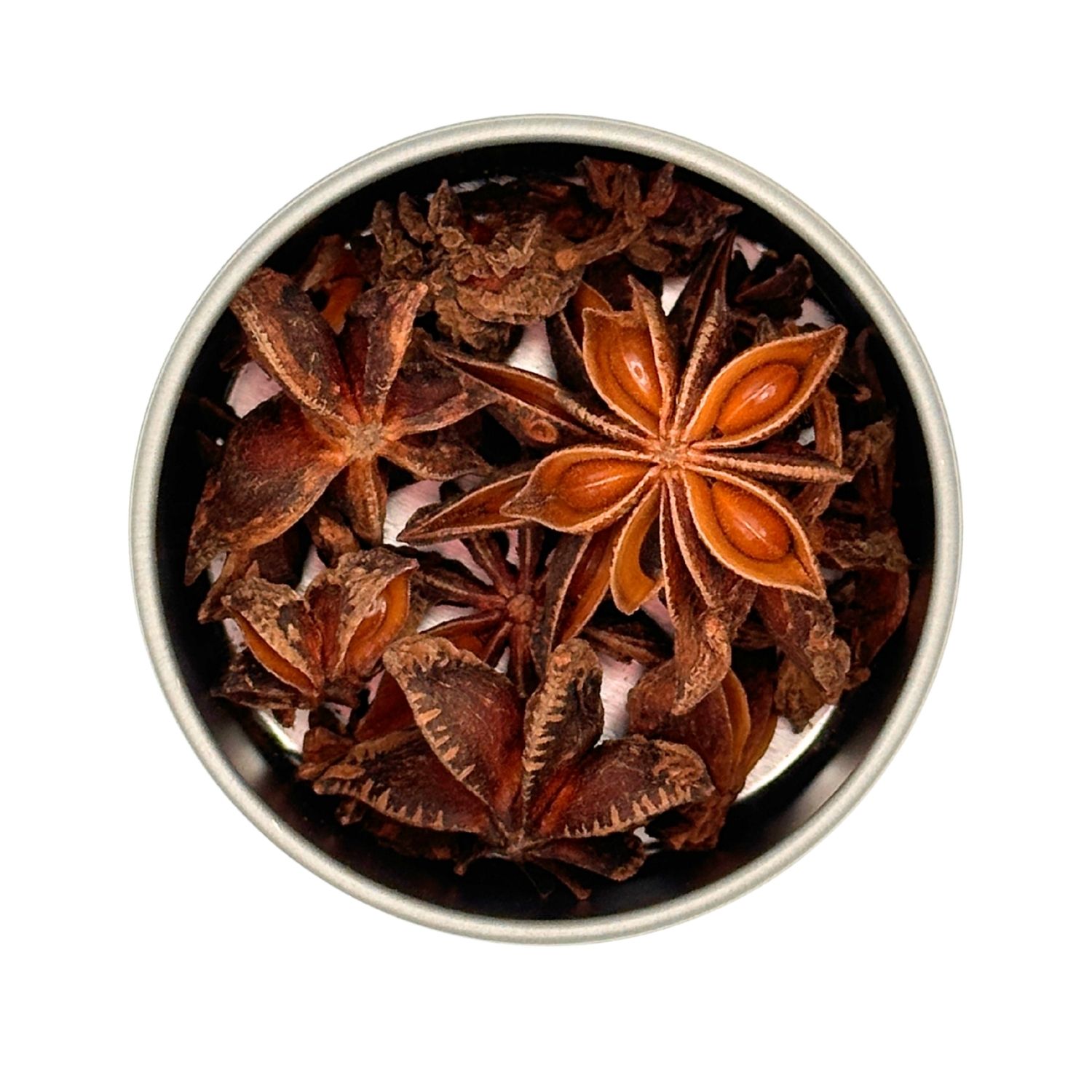
Star Anise is the whole dried fruit of Illicium verum, a tree in the family Schisandraceae. Each fruit forms the distinctive eight-pointed star that gives the spice its name. Like European anise, it owes its licorice-like aroma to anethole, though the two come from completely different plant families.
About the plant
Star Anise is native to southern China and northern Vietnam and has been a centerpiece of Chinese cooking for centuries. It is one of the components of Chinese five-spice powder and a common aromatic in braised dishes and pho broth. The striking star shape also makes it a decorative choice in clear bottles of infused oil, vinegar, or spirits.
Related herbs
- Anise Seed Powder — the unrelated Mediterranean herb with a similar flavor.
Star Anise, Whole: form & sizes
We carry Star Anise, Whole as whole dried star-shaped fruits, sold by weight in sizes from 1 oz to 1 lb. We make no health or therapeutic claims.
Storage
Store Star Anise, Whole in an airtight container, away from heat, light, and humidity, to preserve its color and aroma.
Star Anise, Whole at a glance
- Botanical name
- Illicium verum
- Family
- Schisandraceae
- Native region
- southern China and northern Vietnam
- Plant part
- dried fruit
- Notable use
- One of the five spices in Chinese five-spice powder
- Form
- whole dried star-shaped fruits
- Sizes
- 1 oz to 1 lb
Frequently asked questions
What is Star Anise, Whole?
What sizes does Star Anise, Whole come in?
Do you ship Star Anise, Whole to my state?
Buy Anise Star - Whole Online
Select a size
Orders ship within 24 hours of being placed.
Secure encrypted checkout
What customers say about our shop
4.8 stars across 284 Google reviewsGood herb selection; reasonable prices. Lots of loose herbs, tinctures, smudge/incense, pipes. By herbs I mean various medicinal and alchemical herbs - I bought some lemon balm, organic roses, and lemongrass as well and bundles white sage and white pine. Good source for alternative/complimentary smoking herbs as well…
Herb Stomp (Sandy) is BY FAR the best Herb and Kratom store I have ever been to. In my 2.5 years of using Kratom, I have never been to a place as helpful as this! The employees are so so helpful! Usually when buying Kratom, I’m met with grumpy head shop owners who seem to want me to either spend out of my budget, or…
Awesome, knowledgeable staff. Great selection and quality of herbs and ethnobotanicals. I also appreciate that testing is done for contaminants and potency on certain herbs. In 8 years coming here I have yet to purchase anything stale or otherwise questionable quality. We technically *could* ask for more in a local…
also in herbs & spices