The effects people describe from blue lotus are mild relaxation, sleepiness and a gentle lift in mood, and smoking or vaping it is said to bring on euphoria.1 No controlled human study has measured any of those effects, so everything we know comes from traditional use, lab chemistry and a handful of emergency room cases.
We sell blue lotus, so we have an interest here. That is exactly why we want this page to be straight with you. If you want the basics first, start with what blue lotus is, how to make the tea, or white lotus vs. blue lotus. This post is only about effects, risks and the law.
What does blue lotus feel like?
Poison Control (the National Capital Poison Center) summarizes the reported effects this way: as a tea it is used "for relaxation, sleep, and to provide a mood boost," and smoking or vaping it "can cause euphoria."1 Notice what is missing from that list at ordinary amounts: visions, or any strong change in perception.
At higher amounts, the same source lists dizziness, drowsiness, confusion, agitation, nausea and a fast heartbeat, along with hallucinations and trouble concentrating or keeping balance.1 Mixing it with alcohol, pain medication or anti-anxiety drugs may cause too much sedation.1
The chemistry: aporphines, nuciferine and apomorphine
Two compounds come up every time blue lotus is discussed: nuciferine and apomorphine. Poison Control describes apomorphine as acting mainly on dopamine, and nuciferine as acting on serotonin and also on dopamine.1 Both belong to a family of plant alkaloids called aporphines. Nuciferine is found in both Nymphaea caerulea and the sacred lotus, Nelumbo nucifera.2
The most detailed lab work on nuciferine is a 2016 study that tested it against a wide panel of brain receptors and in rodents. It blocked the 5-HT2A, 5-HT2C and 5-HT2B serotonin receptors, partly activated the D2 dopamine receptor, and the authors concluded its profile looks like an atypical antipsychotic drug such as aripiprazole.3 That is a sedating, calming kind of profile, which lines up with the relaxation people report.
There is a catch. A 2023 analysis of authentic blue lotus extracts found apomorphine and nuciferine "virtually absent" from them.4 That study looked at extracts made for fragrance use, and several of its authors work for an essential oil company, so it does not settle the question for dried flowers or tea. But it does mean nobody can tell you how much of either compound is in a given cup or a given gram, and the amount probably varies a lot.
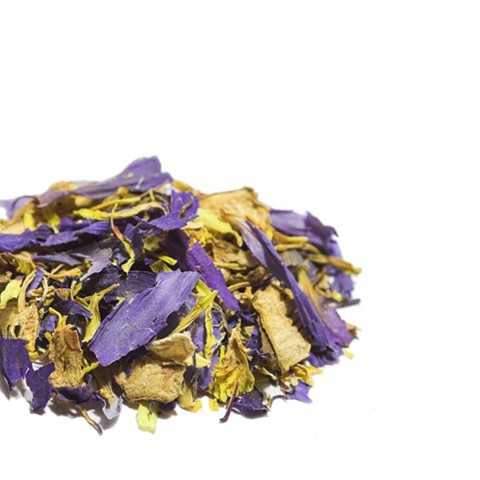
Smoking blue lotus
Smoking and vaping are the routes most associated with a noticeable effect, and also the routes in most of the reported medical cases. In a 2023 case series, five active-duty service members went to an emergency department with altered mental status after using blue lotus. Four had vaped a blue lotus extract and one had drunk an infused beverage. They had sedation and perceptual disturbances, and all recovered with supportive care.5
The bigger problem with vapes is what else is in them. A 2024 forensic study reviewed seized products that mentioned blue lotus or valerian root on the label. Ninety percent of them contained synthetic cannabinoids, the same drugs sold as "spice." The authors warned that symptoms blamed on blue lotus may actually come from those added drugs.6 Poison Control makes the same point: products may be mixed with other ingredients, including synthetic cannabinoids, and many products sold as blue lotus contain other plant species.1
If you smoke anything, you are also inhaling combustion products. And if you buy a pre-made vape cartridge labeled "blue lotus," you have no real way of knowing what is in it.
Does blue lotus cause hallucinations?
Rarely, and usually at high doses. Poison Control lists hallucinations among the effects seen at high doses,1 and the case series above reported "perceptual disturbances."5 One of those patients, a 29-year-old who had vaped blue lotus, was agitated, possibly hallucinating and less responsive; his symptoms cleared within four hours.1
The chemistry gives a reason to be skeptical of blue lotus as a psychedelic. Psilocybin and similar psychedelics work by switching on the 5-HT2A serotonin receptor.8 Nuciferine does the opposite in lab tests: it blocks that receptor.3 Add the synthetic cannabinoid findings, and some reported "blue lotus hallucinations" may have come from something else in the product.6
Why blue lotus experiences vary so much
Ask ten people what blue lotus did for them and you will get ten answers, from "nothing" to "too much." The research points to three reasons.
- The product may not be blue lotus. Many products sold under the name contain other plant species.1 Our white lotus vs. blue lotus post explains the most common mix-up.
- The product may contain something else entirely. Vapes and blends have turned up with synthetic cannabinoids in them.6
- The alkaloid content is unknown. One analysis found the main alkaloids virtually absent from the extracts it tested,4 and the plant can also pick up heavy metals and other contaminants from the soil it grows in.1
None of this means blue lotus does nothing. It means a strong or strange reaction is a reason to question the product, not to take more.
Blue lotus tea benefits: what is known
Blue lotus tea is traditionally used to relax, sleep and lift mood.1 We could not find a single controlled human trial testing any of those uses. Poison Control's summary is the fairest one we have read: small amounts of pure plant material are "probably safe," but its safety "has not been studied."1
Lab studies on nuciferine report many other effects, including on blood fats and blood pressure, but these come from the compound, mostly sourced from sacred lotus, not from people drinking blue lotus tea.2 We would not read any health benefit into them. Tea is also the gentlest route: it is the one with the least drama in the medical reports, and the one where you control what goes in the cup.
Is blue lotus legal?
- Federal law. Blue lotus is not a federally controlled substance in the US. It is legal as a botanical product everywhere except Louisiana, but the FDA has not approved it for human consumption.1
- Louisiana. State law lists Nymphaea caerulea as a prohibited plant. Making or distributing it for smoking, inhaling or eating is a felony, and possessing it for those uses is a misdemeanor. Growing it purely for decoration or landscaping is exempt.7 We do not ship blue lotus to Louisiana.
- Military. The Department of Defense prohibits its use by US service members.1
- Outside the US. Some countries are reported to restrict it, but we could not confirm those laws from official sources. If you are outside the US, check your own country's rules before ordering.
Who should avoid blue lotus
- People who are pregnant or breastfeeding, since its safety has not been studied in those groups.1
- Children.1
- People with liver disease.1
- Anyone on medication that affects dopamine or serotonin, such as antidepressants, antipsychotics or Parkinson's drugs, or on drugs processed by the same liver enzymes.1
- Anyone drinking alcohol or taking sedatives, pain medication or anti-anxiety drugs, because of added sedation.1
- Active-duty military personnel.1
- Anyone who has to drive or operate machinery afterward.
What we carry
We sell Nymphaea caerulea as whole dried flowers, premium buds, powder, a 25x extract and a tincture, all sold to adults 21 and over. We make no health or therapeutic claims about any of them.
Sources
- Poison Control (National Capital Poison Center). "Blue Lotus: Serenity in Every Petal, But Is It Safe?" (reported effects, chemistry, adulteration, legal status, who should avoid). poison.org
- Ren X, et al. "Advances in the pharmacological effects and mechanisms of Nelumbo nucifera Gaertn. Extract nuciferine." Journal of Ethnopharmacology, 2024. pubmed.ncbi.nlm.nih.gov/38670406
- Farrell MS, McCorvy JD, Huang XP, et al. "In Vitro and In Vivo Characterization of the Alkaloid Nuciferine." PLoS One, 2016. pubmed.ncbi.nlm.nih.gov/26963248
- Dosoky NS, et al. "Chemical Composition, Market Survey, and Safety Assessment of Blue Lotus (Nymphaea caerulea Savigny) Extracts." Molecules, 2023. pubmed.ncbi.nlm.nih.gov/37894493
- Schimpf M, Ulmer T, Hiller H, Barbuto AF. "Toxicity From Blue Lotus (Nymphaea caerulea) After Ingestion or Inhalation: A Case Series." Military Medicine, 2023. pubmed.ncbi.nlm.nih.gov/34345890
- Seither JZ, et al. "Synthetic cannabinoid identification in cases associated with blue lotus and valerian root vaping products." Journal of Analytical Toxicology, 2024. pubmed.ncbi.nlm.nih.gov/39082147
- Louisiana Revised Statutes 40:989.2 (prohibited plant products), which lists Nymphaea caerulea and exempts aesthetic, landscaping and decorative use. codes.findlaw.com
- National Institute on Drug Abuse. "Psilocybin (Magic Mushrooms)" (psilocin activates the 5-HT2A serotonin receptor). nida.nih.gov
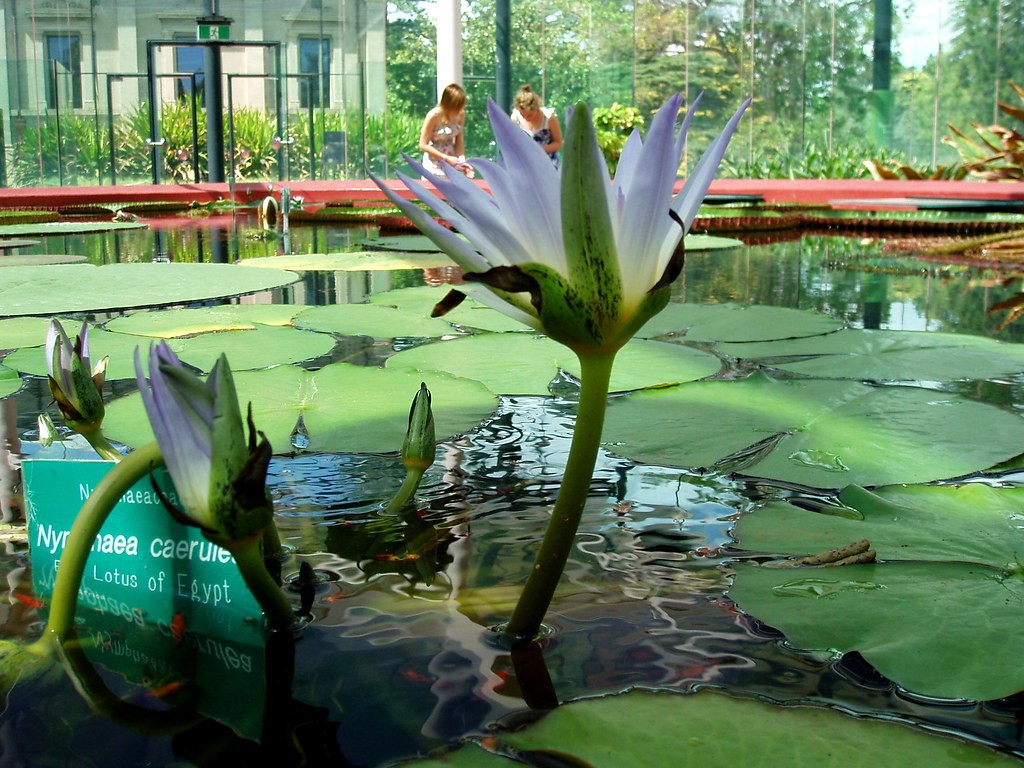
Header photo: "The Blue Lotus; Nymphaea Caerulea. Adelaide Botanic Gardens. SA" by amandabhslater, licensed CC BY-SA 2.0. Source.