
"Lab tested" is printed on a lot of kratom. On its own, the phrase tells you very little. The document that backs it up is the certificate of analysis, or COA, and once you know how one is laid out you can check a vendor's claim in a couple of minutes. This guide walks through a kratom lab report from the top of the page to the bottom: who issued it, what each panel checks, why those panels exist, and the details that should make you put a report down. It is about reading paperwork, not about using kratom, and it is general information rather than legal advice.
What is a kratom certificate of analysis?
A certificate of analysis is a report from a testing laboratory that lists what the lab looked for in a specific sample and what it found. For kratom, that usually means a contaminant screen plus a measurement of the plant's main alkaloids. A useful COA ties those results to one identifiable lot of product, so the numbers describe the bag on the shelf rather than kratom in general.
Some states now write COAs into law. According to a 2023 Congressional Research Service review of state kratom laws, Utah requires a third-party certificate of analysis, Oregon requires third-party testing for contaminants, and Oklahoma requires vendors to provide test results from a "United States-based testing facility" on request.1
Who issues the report: third-party labs and ISO/IEC 17025
The first thing to read is the letterhead. A report from an independent, third-party lab carries more weight than one a vendor ran on its own bench, for the simple reason that the lab has no stake in the result. Our kratom is tested by third-party labs, not in-house, as we explain on our kratom page.
The second thing is accreditation. ISO/IEC 17025 is the main standard used to assess the competence of testing and calibration laboratories.2 Accreditation is granted by an accreditation body, such as A2LA, ANAB or PJLA in the United States, and it comes with a defined scope that lists the specific tests the lab is accredited to perform.2 That scope matters. A lab can be accredited for heavy metals and not for something else on the same report. The practical check is to look up the lab's certificate number on the accreditation body's website and confirm the test you care about is on its scope.2
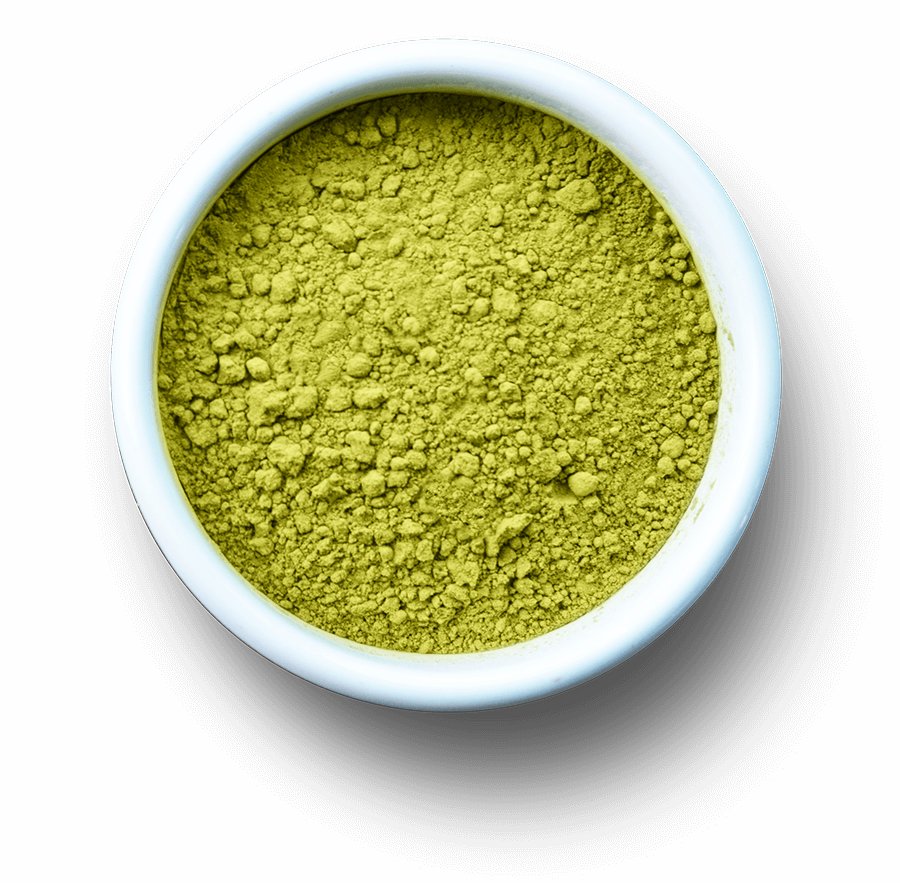
The panels on a kratom COA, and why each one is there
Most kratom reports are split into a few panels. Here is what each one measures and the reason it shows up.
Microbial panel: salmonella, E. coli, yeast and mold
This panel looks for bacteria and fungi. Pathogens such as Salmonella and E. coli are normally reported as detected or not detected in a set sample weight. Yeast and mold, and often total aerobic count, are reported as colony-forming units per gram (CFU/g), with the lab's limit printed next to the result.
Salmonella is on kratom reports for a documented reason. The CDC investigated a multistate outbreak of Salmonella infections linked to kratom products: by the time it declared the outbreak over on May 24, 2018, it had counted 199 ill people in 41 states, with illness onsets from January 11, 2017 to May 8, 2018.3 The CDC reported that several companies recalled products and that the investigation could not identify a single common source of contaminated kratom.3 The FDA's kratom page says the agency has warned the public when certain kratom products were contaminated with Salmonella.4
Heavy metals: lead, arsenic, cadmium and mercury
These four are the standard heavy metal panel for botanicals. Results are usually given in parts per million (ppm) or micrograms per gram, next to an action limit. Look for an actual number or "ND" (not detected) for each metal, along with the lab's limit of quantitation, rather than a single "pass" for the whole panel.
This panel also has a regulatory history behind it. In November 2018 the FDA said it had tested 26 kratom products and found lead and/or nickel in all of them; then-Commissioner Scott Gottlieb said some contained levels that "with chronic use, could cause some people to suffer from heavy metal poisoning."5 The FDA's current kratom page still refers to its warnings about "concerning levels of heavy metals" in certain products.4
Alkaloid content: mitragynine and 7-OH
The alkaloid panel reports how much mitragynine and 7-hydroxymitragynine (7-OH) the lab measured, usually as a percentage of the sample's weight. Read this as a label-accuracy and identity check: does the number match what the label states, and is the material what it claims to be? We don't say anything here about what those numbers mean for a person, and you should be wary of any vendor that does.
The 7-OH figure carries extra weight now because of law. The CRS review found that Arizona, Georgia, Oklahoma and Utah require labels to state the amount of mitragynine and 7-OH, and that Arizona, Oklahoma, Texas and Utah prohibit products where 7-OH is greater than 2% of the total alkaloid content.1 The DEA's October 14, 2026 notice of intent proposes federal control of 7-OH and mitragynine pseudoindoxyl above a threshold of 1 mg per gram for solids or 1 mg per milliliter for liquids, or where the ratio of mitragynine to those compounds is less than 100.6 Our guide to the DEA and 7-OH covers where that stands. Only a lab assay can tell you which side of a line a product sits on.
Residual solvents (extracts only)
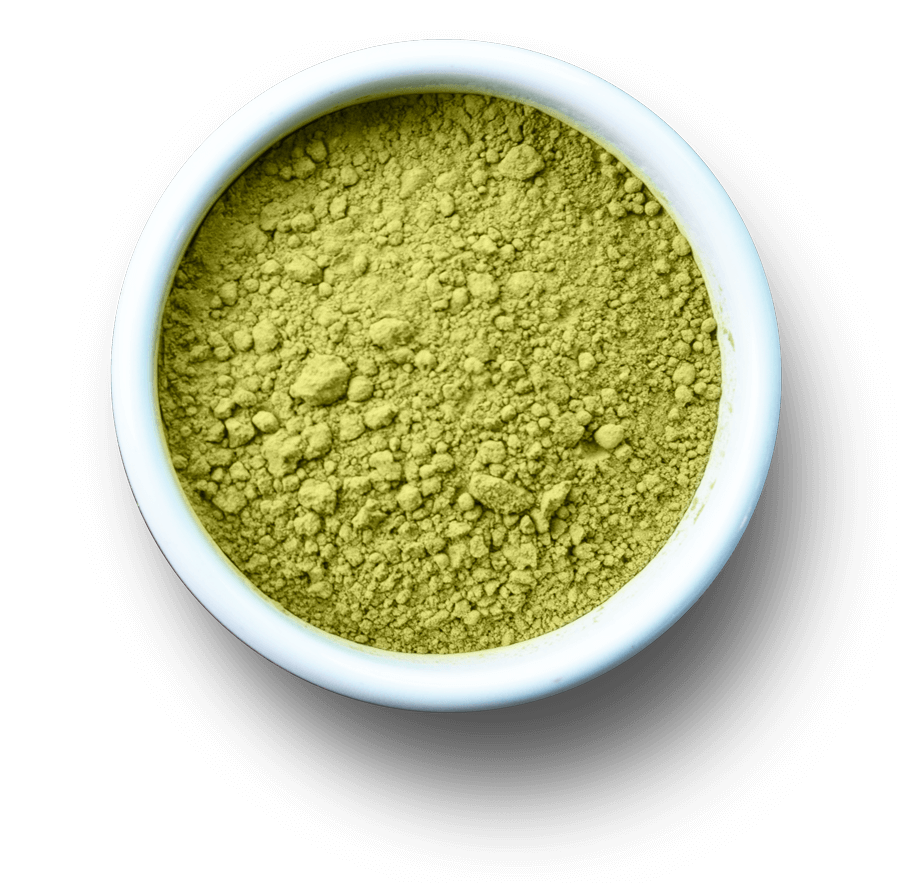
Plain leaf powder is not made with solvents, so you will not usually see this panel on it. Extracts are a different story. Where a solvent was used to make a concentrate, a residual solvent panel reports how much of it is left in the finished product, typically in ppm against a limit. If you are looking at an extract like our Gold Reserve or Black Reserve, ask whether the report includes this panel.
How to read the header: the details that make a report count
Before you look at a single result, check the top of the page. A report worth trusting shows:
- The lab's name, address and accreditation number, so you can look it up.
- A sample or report ID unique to that test.
- The product name and a lot or batch number that matches the code on your package.
- The date the sample was received and the date it was reported.
- The test method named for each panel, and the units each result is reported in.
- A signature or authorization from the lab.
Red flags on a kratom COA
- No batch or lot number. A report that can't be tied to a lot doesn't describe what you bought.
- No lab name, or a lab you can't find. If a search for the lab and its accreditation turns up nothing, treat the report as unverified.
- An old or expired date. A report from years ago, or one dated before the lot code on your bag, is describing different material.
- A test that isn't on the lab's accredited scope. Accreditation is test-specific.2
- "Pass" with no numbers. You want the measured value, the limit and the units.
- Edits that don't line up. Mismatched fonts, a cropped header, or a product name that looks pasted in are reasons to ask the lab directly.
The American Kratom Association GMP program
You will see some vendors describe themselves as AKA GMP Qualified. The American Kratom Association runs a GMP Standards Program and publishes a list of qualified vendors. According to the AKA, participants commit to following the program's manufacturing and processing standards and must complete an annual independent third-party audit; once that audit is verified, the vendor is considered AKA GMP Qualified.7 The AKA also says the list is "for informational purposes only" and should not be read as its endorsement of any vendor or product.7 GMP status is about how a facility operates. It is not a substitute for a lot-specific COA.
What state kratom laws say about testing and labels
Many states that allow kratom regulate it under some version of a Kratom Consumer Protection Act, and those laws are not uniform.1 As summarized above, some require alkaloid amounts on the label, some cap 7-OH as a share of total alkaloids, and some require third-party testing or a COA.1 The Legislative Analysis and Public Policy Association reported that as of January 2026, 30 states and the District of Columbia regulate kratom.8 Rules keep changing, so check your own state. Our kratom legality guide lists where we do and don't ship.
At the federal level, the FDA says kratom is not appropriate for use as a dietary supplement and cannot be lawfully added to conventional foods.4 A COA does not change a product's legal status. It only documents what a lab found in one sample.
How to request a Herb Stomp COA
Our kratom is third-party lab tested by ISO/IEC 17025 accredited laboratories for heavy metals, microbial contaminants and alkaloid content, and certificates of analysis are available on request. To get one, use our COA request page. Tell us the product and the batch number from your bag (an approximate purchase date works if you don't have it), pay the $5 fee per certificate at checkout, and we email you the lab report for that lot. Then read it the way this guide describes: lab name, accreditation, lot number, dates, and the actual numbers.
You can browse the full range, including Red Maeng Da, Green Maeng Da and Red Bali, on our kratom page, and read what our panel covers in the lab panel section there.
Sources
- Congressional Research Service, "Kratom Regulation: Federal Status and State Approaches," Legal Sidebar LSB11082, November 28, 2023 (state labeling, 7-OH cap and testing provisions). everycrsreport.com
- ComplianceGate, "ISO 17025 Accreditation for Product Testing Labs: A Complete Guide" (the standard, accreditation bodies, scope of accreditation). compliancegate.com
- Centers for Disease Control and Prevention, "Multistate Outbreak of Salmonella Infections Linked to Kratom," final update May 24, 2018. archive.cdc.gov
- U.S. Food and Drug Administration, "FDA and Kratom," content current as of December 2, 2025. fda.gov
- SupplySide Supplement Journal, "FDA finds heavy metals in some kratom products," November 29, 2018 (FDA testing of 26 products; Commissioner Gottlieb statement). supplysidesj.com
- Drug Enforcement Administration, "Schedules of Controlled Substances: Temporary Placement of 7-Hydroxymitragynine and Mitragynine Pseudoindoxyl Above a Specified Threshold in Schedule I," notice of intent, published October 14, 2026. federalregister.gov
- American Kratom Association, "GMP Qualified Vendors." americankratom.org
- Legislative Analysis and Public Policy Association, "Kratom: Summary of State Laws," February 5, 2026. legislativeanalysis.org
Header photo: test tubes in a rack by Plato Terentev, via Pexels (Pexels license). This post is general information, not legal advice.